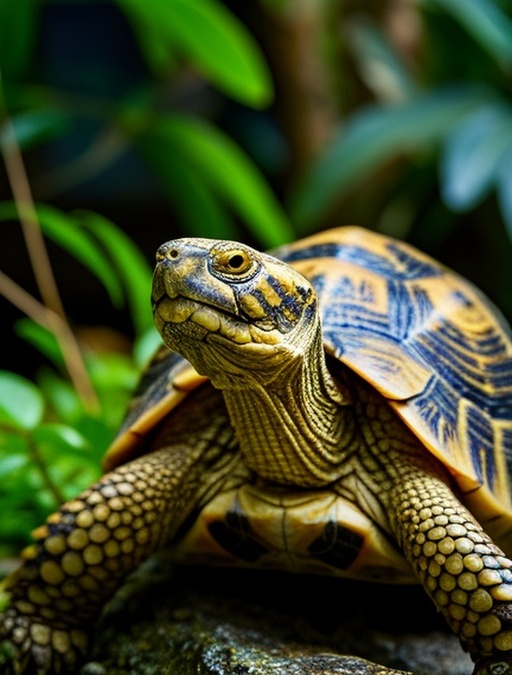
First off, let me tell you, Boris wasn’t exactly thrilled to meet me when I brought him home. He spent the first three days tucked tight in his shell, refusing to come out even when I left his favorite dandelion greens right in front of him. I was worried I’d made a mistake—like, did he hate me already? Turns out, Russian tortoises are super skittish at first, especially if they’ve had a rough past (which Boris definitely had, according to the rescue). I adjusted his enclosure to be cozier—added more hides, switched from sand to coconut coir substrate because it’s softer for digging, and made sure the temperature was just right (75-85°F on the warm side, 65-70°F on the cool, in case you’re wondering). Slowly, he started peeking out.
Once he got comfortable, his true personality came out—and let me tell you, this guy is a grump. If I even try to pick him up to clean his enclosure, he hisses like I’m trying to steal his favorite rock. One time, I moved his food bowl a few inches to the left, and he stared at me for five whole minutes before slowly trundling over, then knocked the bowl over like he was throwing a tantrum. Classic Boris move. But here’s the thing—he’s got a soft side too. Every morning, when I walk into the room with a handful of fresh clover, he’ll waddle over as fast as his little legs can carry him, and even nudge my hand with his nose before digging in. It’s his way of saying “thanks, I guess” without actually being nice.
Oh, and don’t get me started on his escape attempts. Russian tortoises are expert diggers, and Boris is no exception. Last summer, I let him roam in the enclosed backyard for a bit. I turned my back for two minutes to grab a drink, and when I came back, he was gone! I panicked—checked under every bush, called his name (yes, I call him by name, don’t judge), and finally found him in the neighbor’s flower bed, munching on their rose bushes like he owned the place. The neighbor thought it was hilarious, but I was so relieved I could’ve cried. Turns out, he’d dug under the low fence line—little troublemaker.
Taking care of Boris has taught me so much about Russian tortoises that I never knew before. For one, they hate fruit—like, if I even offer a strawberry, he’ll just walk away like it’s garbage. Their diet needs to be mostly leafy greens: dandelions, clover, kale (in moderation), and some veggies like bell peppers or carrots occasionally. Also, even though wild Russian tortoises hibernate, I decided not to let Boris hibernate because the rescue didn’t know his exact age or health history. Instead, I keep his enclosure warm all winter, and he’s perfectly happy just lazing around and eating.
Now, a year later, Boris is still my grumpy little buddy. He doesn’t like cuddles, he still hisses when I move his stuff, but he’s mine. Every time I sit on the floor next to his enclosure, he’ll come over and rest his head on the glass like he’s saying “hey, don’t bother me but stay here.” It’s the weirdest, most endearing thing ever. If you’re thinking about getting a Russian tortoise, just know they’re not the most affectionate pets, but they’ve got so much personality once you get to know them. And trust me, once you fall for one, there’s no going back.