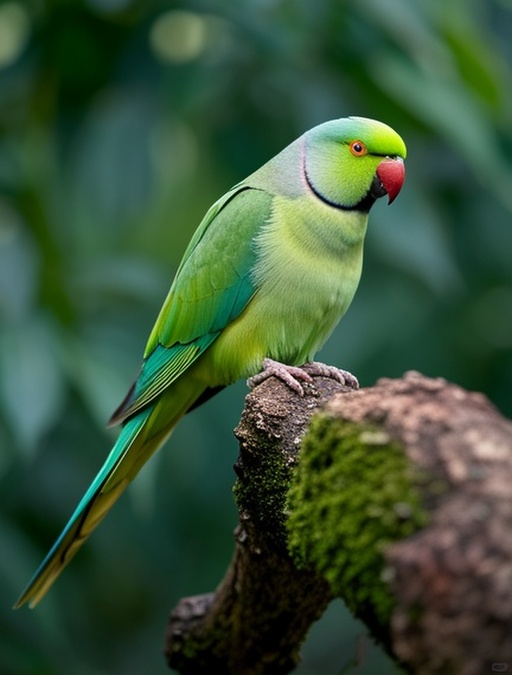
First off, let's talk about their looks. Ring-necked Parakeets are mostly a bright, vibrant green, which makes them look like little flying emeralds. The males have this beautiful black and rose-colored ring around their necks, which gives them their name. Females usually don't have the ring, or it's very faint, so you can tell them apart pretty easily. They're medium-sized birds, about 16 inches long including their long, elegant tails. When they spread their wings, you can see stunning blue and yellow feathers underneath—it's like a surprise party every time they fly!
Now, personality-wise, these birds are total characters. They're super smart and curious, always getting into things. If you leave a shiny object lying around, they'll probably try to steal it. They love to play and need lots of toys to keep their brains busy. Boredom is their worst enemy, and a bored parakeet can become loud or destructive, chewing on furniture or even their own feathers. So, you gotta keep 'em entertained with puzzles, foraging toys, and regular out-of-cage time to explore safely.
Talking about noise, yeah, they can be loud. Ring-necked Parakeets are known for their sharp, screechy calls, especially in the morning and evening. It's just their way of saying 'hello world!' or 'feed me now!' But here's the cool part: they're excellent mimics. With patience and training, many learn to talk quite well, picking up words, phrases, and even sounds like doorbells or laughter. It's hilarious when they start imitating your phone ring! Training them is key—use positive reinforcement with treats like millet or nuts, and they'll be eager to learn tricks and words.
When it comes to care, these birds need a spacious cage, at least 24x24x36 inches, with plenty of perches of different sizes to keep their feet healthy. Diet is crucial too; don't just feed them seeds all the time. A balanced diet includes high-quality pellets, fresh veggies like carrots and broccoli, and some fruits as treats. Avoid avocado, chocolate, and caffeine—they're toxic to birds. Also, fresh water daily is a must. Oh, and they're social creatures, so if you're away a lot, consider getting a pair to keep each other company, but be ready for double the noise and mess!
Health-wise, Ring-necked Parakeets are generally hardy if cared for properly. Watch out for signs of illness like fluffed-up feathers, lethargy, or changes in appetite, and get them to an avian vet right away. Regular vet check-ups are a good idea. They can live up to 25-30 years in captivity, so getting one is a long-term commitment—like adopting a toddler that never grows up! Grooming is simple: they'll need their nails trimmed occasionally, and you can offer a shallow dish of water for bathing; they love splashing around to keep their feathers clean.
In summary, Ring-necked Parakeets are fantastic pets for the right person. They're beautiful, intelligent, and full of life, but they demand lots of attention, a proper diet, and a stimulating environment. If you're ready for a chatty, playful companion that'll bring joy for decades, this might be the bird for you. Just remember, do your research, and maybe visit a rescue center first to meet some in person. Happy bird parenting!