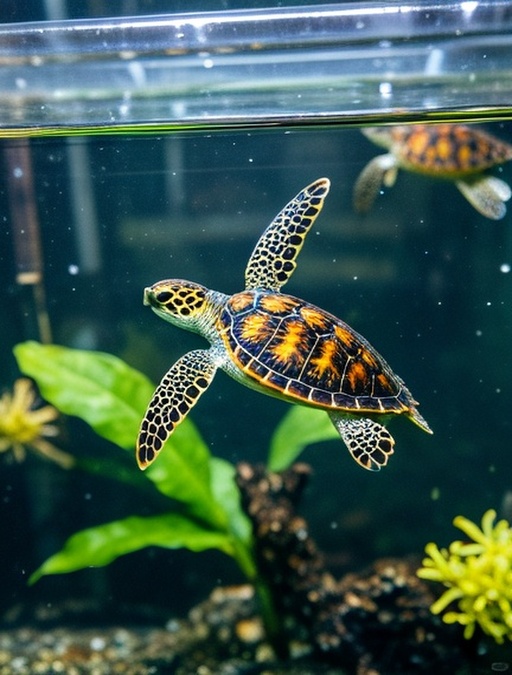
First off, let’s bust the most common myth I hear all the time from people who want a hawksbill pet: “I’m rescuing it from a bad seller, so it’s okay.” Nah, that couldn’t be further from the truth. Every time someone buys an illegal hawksbill sea turtle, you’re telling that seller there’s demand for them, so they’ll go poach more baby turtles from nesting beaches to replace the one you just bought. Hawksbills are listed as Critically Endangered by the IUCN Red List, with their global population dropping by more than 80% in the last three generations, mostly due to illegal trade for their shells, meat, and the exotic pet market. That’s why there are layers of strict international, national, and even local regulations around owning these turtles, and breaking them has real, serious consequences.
The first and most important global regulation you need to know about is CITES, the Convention on International Trade in Endangered Species of Wild Fauna and Flora. Hawksbill sea turtles are listed on CITES Appendix I, which is the highest level of protection possible under the treaty. This means all international commercial trade of hawksbills, whether they’re wild caught or captive bred, is completely banned for all 184 countries that are part of CITES. The only exception is for non-commercial purposes like scientific research or conservation work, and even those require a super rare, hard to get permit that’s almost never issued to private individuals. If someone tries to sell you a hawksbill that they say was imported from another country, even if they claim it’s “captive bred” or has “papers”, 99.9% of the time it’s 100% illegal, and buying it can get you in huge trouble.
Then there are national regulations that add even more layers of protection, no matter where you live. Let’s take the US as an example: hawksbills are listed as Endangered under the US Endangered Species Act (ESA), which makes it illegal to own, sell, import, export, or even harm a hawksbill sea turtle anywhere in the country without a special permit from the US Fish and Wildlife Service (USFWS). Those permits are only given to accredited zoos, research institutions, or conservation groups, never to regular people who just want one as a pet. Alot of people don’t know this, but even if you find a baby hawksbill washed up on the beach after a storm, you can’t take it home to “save” it. You have to call your local marine wildlife rescue immediately, because keeping it even for a few days is a violation of the ESA. Penalties for breaking this law are no joke: you can face fines up to $50,000 and up to a year in federal prison, even if you didn’t know the turtle was protected. Ignorance of the law isn’t a valid excuse here.
The rules are almost identical across most of the world. In the EU, hawksbills are listed on Annex A of the EU Wildlife Trade Regulations, which bans all personal ownership completely, with permits only available for zoos and scientific facilities. In countries like Australia, India, Mexico, and Brazil, all of which have native hawksbill nesting populations, national laws make personal pet ownership a felony with heavy fines and jail time. Even in countries where you might see hawksbills sold openly in local street markets, those sales are unregulated and illegal, and buying one can get you in trouble with local authorities, or even get you detained if you try to bring the turtle back home with you when you travel.
What about captive bred hawksbills, you might ask? If someone breeds them in a tank instead of taking them from the wild, is that allowed? Well, first off, there are almost no legitimate captive breeding programs for hawksbill sea turtles for the pet trade at all. Hawksbills are incredibly hard to breed in captivity: they need huge, carefully controlled saltwater habitats, very specific water temperatures and lighting to trigger mating, and females only lay eggs every 2-3 years even in the wild. Most “captive bred” claims you see on exotic pet websites or social media are straight up lies, the turtles are actually wild caught babies that were poached from nesting beaches before they could make it to the ocean. Even if someone did somehow breed hawksbills legally in captivity, you’d still need to get every required federal, state, and local permit to own one, and those permits are almost never issued to private individuals for personal pet use.
Even if you could somehow jump through all the legal hoops to own a hawksbill, they’re honestly terrible pets for 99% of people. Baby hawksbills are tiny, only a few inches long when they hatch, but they grow up to 3 feet long and can weigh up to 150 pounds when they’re fully grown. That means you’d need a custom saltwater tank that holds thousands of gallons of water, with industrial grade filtration, specialized UV lighting, and constant water quality testing to keep them healthy. They also have a very specific diet: in the wild, they mostly eat sea sponges, which are hard to source and expensive to buy for a pet, and feeding them the wrong food can make them very sick or even kill them. Hawksbills also live for 50 to 60 years, so owning one is a lifelong commitment that very few people are actually prepared to make. Most people who buy baby hawksbills end up abandoning them or turning them over to rescue centers after a few years when they get too big to care for, which is traumatic for the turtle.
If you love hawksbill sea turtles and want to support them instead of owning one, there are tons of awesome legal and ethical things you can do. You can do symbolic adoptions through legitimate marine conservation groups: most of these programs let you “adopt” a wild hawksbill that’s being tracked by researchers, and you get a certificate, regular updates on where your turtle is swimming, and all the money goes towards protecting nesting beaches and reducing illegal trade. You can also volunteer with local sea turtle rescue groups if you live near a coast, help with beach cleanups, or monitor nesting beaches during hatching season. If you see someone selling hawksbill sea turtles as pets online or in person, report them to your local wildlife authorities immediately, that’s one of the best ways to help stop the illegal trade.
At the end of the day, hawksbill sea turtles belong in the wild, not in a home tank. The regulations around owning them aren’t just random rules to annoy pet lovers, they’re there to protect a species that’s on the brink of extinction. It might be tempting to bring a cute baby hawksbill home, but breaking the rules will hurt you and the species as a whole. There are plenty of other awesome aquatic pets that are legal to own and easy to care for, leave the hawksbills to swim free in the ocean where they belong.