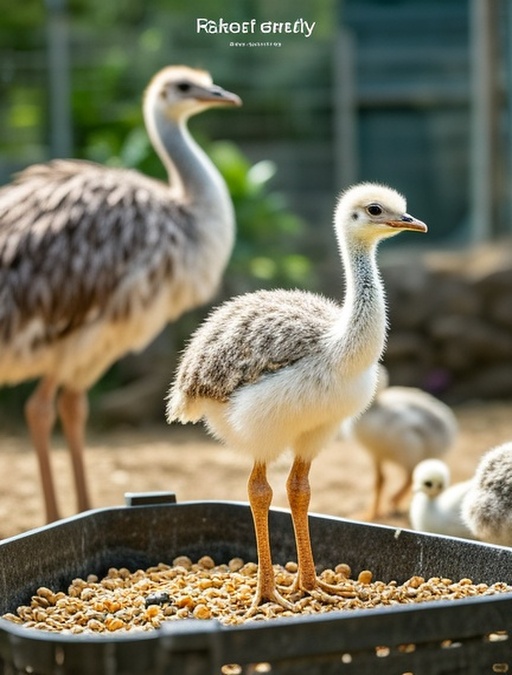
Let’s kick things off with the most delicate life stage: rhea chicks aged 0 to 3 months. These little guys grow insanely fast, so their diet needs to be packed with protein to support bone, muscle, and feather development. You’re gonna want to grab a game bird starter feed that’s 20-22% protein, skip the regular chicken starter—it’s way too low in protein and will leave your chicks with weak legs and stunted growth. Don’t forget to put out free-choice grit from day one, even for tiny chicks! Rheas don’t have teeth, so they need grit to grind up food in their gizzard, no grit means they can’t digest anything properly and can get a life-threatening impacted crop before you even notice something’s wrong. Feed them 4 to 5 small meals a day, and make sure their water is lukewarm for the first 2 weeks—ice cold water can shock their little systems and make them sick. Oh, and keep their feeding area clean, chicks are messy and will step in their food if you let em, leading to mold growth that can make the whole flock ill.
Once your rheas hit 3 months old up to 12 months, they’re officially juveniles, and you can adjust their diet a little. Drop the protein level down to 18% by switching to a game bird grower feed, or if you can only find higher protein turkey grower, mix in a small amount of alfalfa hay or pellets to cut the protein level down just right. This is the fun stage where you can start adding treats! Rheas go crazy for fresh greens like dandelion, clover, kale, and lettuce, plus small bits of fruit like watermelon, strawberries, and apple slices. Just make sure treats only make up 10% of their total diet max, too many treats will fill them up so they don’t eat their nutrient-dense main feed, leading to deficiencies. You can also throw in some mealworms or crickets a couple times a week as a special snack, they’ll come running over as soon as they see you holding the container of bugs, it’s hilarious.
When your rheas turn 1 year old, they’re full adults, and their nutritional needs shift again. For non-breeding adults, you can use a 14-16% protein game bird maintenance feed, and if you’re breeding them, bump it up to 16-18% breeder feed to support egg production and healthy chicks. Adult rheas are total foraging machines, so if you have a grassy pasture for them to roam on, they’ll get a ton of their nutrition from grazing on grass, weeds, and random small bugs they find skittering around, which will cut your feed costs by a lot! You can give them more variety in treats now too, like pumpkin, squash, even small amounts of cooked sweet potato, just keep treats under 15% of their total diet to avoid obesity. A common mistake new adult rhea owners make is overfeeding them—adult rheas only need about 2 to 3 pounds of feed a day each, plus whatever they forage, giving them more than that leads to excess weight that puts way too much pressure on their legs, leading to limping or even permanent joint damage.
Now let’s talk about the stuff you should never, ever feed your rheas, no matter how much they beg for it. First up, avocado is 100% toxic to rheas, even a small bite can cause heart failure and death, so keep all guac and avocado scraps far away from their enclosure. Chocolate, caffeine, and alcohol are also big no-gos, same as they are for most pets, they cause organ damage and can kill them really fast. A lot of people think feeding bread to birds is fine, but it’s actually one of the worst things you can give rheas—bread has basically no nutritional value, just empty calories, so it fills them up without giving them the protein and vitamins they need, and for young chicks it almost always leads to leg deformities that they never recover from. Skip all processed human food too, like chips, candy, fried food, all that junk will mess up their digestive system and lead to long term health issues. Also, don’t give them too much high-sugar fruit like grapes or mango, too much sugar causes diarrhea and gut imbalances that are a pain to fix.
Let’s wrap up with some pro feeding tips that I’ve picked up after raising rheas for 8 years, stuff that no generic feed bag will tell you. First, always have fresh, clean water available 24/7, rheas drink way more than you think, especially in hot summer weather, they can go through 2 to 3 gallons of water a day each. Change the water at least once a day, more if they’ve stepped in it or gotten food in it, dirty water is the number one cause of bacterial infections in rheas. Second, if you’re raising chicks indoors without access to direct sunlight, add a vitamin D and calcium supplement to their water for the first 3 months, lack of vitamin D causes soft bones and leg issues that are super hard to reverse once the chick is older. Third, if you notice your rhea has dull, ragged feathers, is losing weight for no reason, or is limping, check their diet first 9 times out of 10 it’s either a protein deficiency, they’re eating too many treats, or they don’t have access to enough grit. Fourth, don’t panic if your rhea steals a bite of your sandwich off the picnic table once, just don’t make a habit of giving it human food, one accidental bite won’t hurt them, regular snacks will. Oh, and if you can’t find game bird feed locally, turkey feed works as a substitute, just make sure to adjust the protein level to match what your rhea’s life stage needs, and don’t use ostrich feed, it’s way too high in protein for rheas and will cause gout and kidney issues over time.