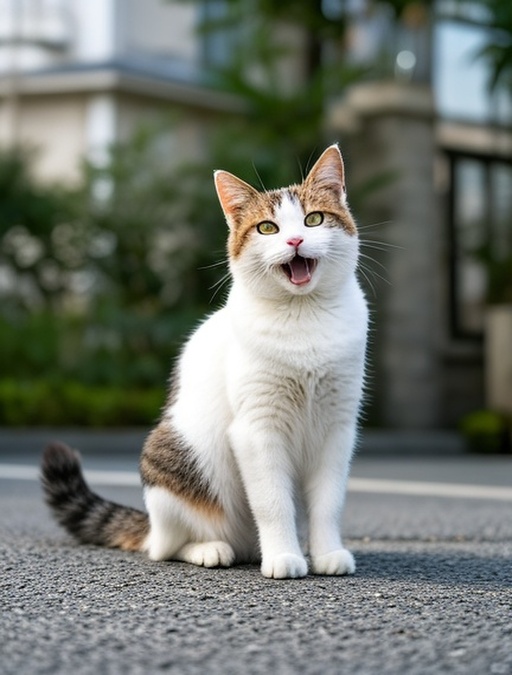
First up, the most basic rule you can’t skip: registration, licensing, and microchipping. Almost every urban and suburban area in the U.S., EU, Canada, and most parts of East Asia require all domestic cats, purebred or mixed, to be registered with your local animal control department, usually by the time they’re 6 months old. For purebred Japanese Bobtails, you might also be asked to provide a copy of their pedigree papers during registration if your area has specific tracking rules for purebred pets, per TICA’s 2024 pet ownership guidelines. Microchipping is mandatory in 32 U.S. states as of 2024, per ASPCA data, and it’s required in almost all EU countries too. It’s a super quick, painless procedure, and it makes it 10x more likely your curious Bobtail will be returned to you if they ever slip out the door. Don’t forget to check your rental or HOA rules too! A lot of leases and homeowners associations require pet deposits or monthly pet fees, even for small cats like Japanese Bobtails (they only weigh 6 to 10 pounds fully grown, but some places still have blanket pet policies). I’ve heard of folks getting eviction notices because they forgot to disclose their Bobtail to their landlord, so don’t skip that step.
Next, vaccination and health mandates that are non-negotiable almost everywhere. Per AAFP’s 2023 Feline Vaccination Guidelines, all Japanese Bobtails need core vaccines no matter if they’re 100% indoor or get outside time sometimes: rabies, FVRCP (which protects against feline viral rhinotracheitis, calicivirus, and panleukopenia), and optional FELV (feline leukemia) shots if they ever go outside. Rabies vaccines are legally required in 99% of U.S. counties, and you can get fined $100 to $500 if your cat isn’t up to date and gets picked up by animal control, even if they never leave your house. If you plan on showing your Japanese Bobtail (they’re super popular in cat shows thanks to their unique look and friendly personality), TICA and CFA (Cat Fanciers’ Association) both require all show entries to have an up-to-date health certificate from a licensed vet, plus proof of spay or neuter unless you’re a registered professional breeder. Oh, and if you travel with your Bobtail across state lines or internationally, you’ll need a health certificate dated within 10 days of travel per USDA rules, and a lot of rabies-free countries like Australia and New Zealand require additional rabies titer tests months before you arrive, so plan ahead.
If you’re thinking about breeding your Japanese Bobtail, there are a whole extra set of rules you have to follow too. Japanese Bobtails are a naturally occurring ancient breed, so they don’t have as many genetic health issues as some other purebred cats, but that doesn’t mean you can just breed them whenever you want. Most cities limit the number of intact (not spayed or neutered) cats you can keep in your home to 2 max, unless you have a valid cattery license from your local government. Per CFA’s breeding guidelines, anyone breeding Japanese Bobtails has to adhere to breed standard rules to avoid passing on rare genetic issues like mild hip dysplasia or tailbone abnormalities that can cause pain for the kittens. Backyard breeding (breeding without a license and proper health checks) is illegal in a lot of areas, and you can face fines of up to $2,000 per kitten if you’re caught selling unregistered, unvaccinated Bobtail kittens. A lot of cities also require you to spay or neuter your pet by 6 months old unless you have a specific breeding exemption, so check your local laws before you skip that procedure.
Then there are containment and public space rules you might not know about. A lot of people still think it’s fine to let cats roam free around the neighborhood, but that’s actually illegal in over 40% of U.S. suburban areas, and most cities in the EU have strict anti-roaming rules for cats too. The Humane Society reports that free-roaming cats have a 3x shorter average lifespan than indoor cats, and Japanese Bobtails are extra curious so they’re way more likely to wander off, get hit by a car, or get into fights with other animals if left unsupervised outside. If you want to take your Bobtail out for walks or to a public park, almost every area requires them to be on a harness and leash, or in a closed carrier – no exceptions. If you have a backyard you want to let them play in, you’ll need to install a cat-proof fence or a catio to keep them contained, otherwise you can get fined if your cat wanders onto a neighbor’s property, poops in their garden, or knocks over their bird feeders. I’ve had neighbors report me once because my old Bobtail Mochi kept sneaking into their yard to steal their cat’s food, and I had to pay a $75 fine before I put up a catio, so trust me, it’s worth it to invest in containment.
Waste and nuisance regulations are another big one that a lot of cat owners overlook. You might think litter box waste is no big deal, but the U.S. EPA 2022 pet waste guidelines explicitly ban flushing cat litter down the toilet, because it can carry toxoplasmosis that kills marine life like sea otters when it gets into the water system. You have to bag all cat litter and throw it in your regular trash, or use certified compostable litter if you have a separate pet waste compost system that doesn’t get used for food plants. Also, Japanese Bobtails are known for being super chatty – they love trilling and meowing to talk to their owners – but if you live in an apartment, you have to make sure their noise doesn’t violate local noise ordinances. Most areas have rules that say pets can’t make continuous noise for more than 10 minutes at a time during quiet hours (usually 10pm to 7am), and if your neighbors report you for excessive noise, you’ll get a warning first, then fines up to $200 for repeated offenses. If your Bobtail is extra vocal at night, try playing with them for 30 minutes before bed to tire them out, it works wonders.
You might be wondering what happens if you accidentally break one of these rules, right? Most of the time, you’ll get a written warning first, and you’ll have a set amount of time to fix the issue – like get your cat vaccinated, renew their registration, or install a catio. But if you ignore the warning, or repeat the offense multiple times, you can face fines starting at $50 up to several thousand dollars, and in extreme cases of neglect or repeated violations, animal control can take your Japanese Bobtail away. But these rules aren’t just there to punish you – they’re there to keep your cat safe and make sure pet ownership is fair for everyone in the community. I’ve owned two Japanese Bobtails over the past 12 years, and the only issue I ever had was forgetting to renew their annual registration once, which got me a $25 fine that was super easy to fix by updating their info online. At the end of the day, following these rules means you get to enjoy years of happy snuggles with your pom-pom tailed best friend without any unnecessary stress.