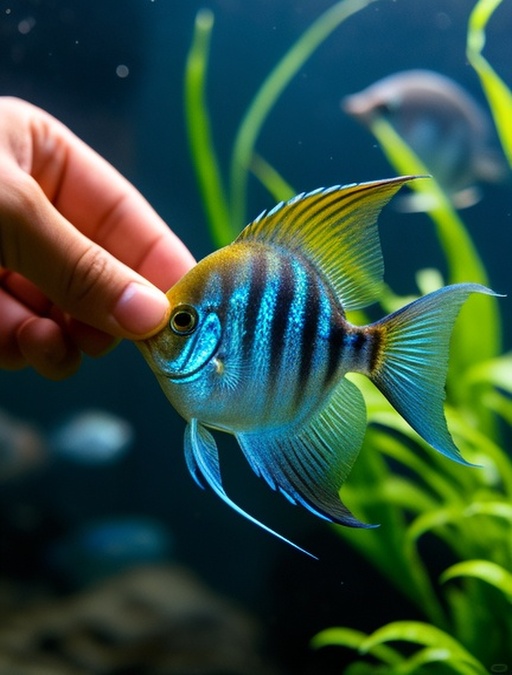
First off, let’s talk prep work, cause you can’t just jump into training right after you bring your angelfish home. Wait at least 2 weeks after adding them to your tank, so they’re fully acclimated, not hiding all the time, and their eating schedule is regular. You only need two things for training: high-value treats, and a simple target. Skip their regular flake or pellet food for training rewards, they won’t care enough to work for it. Go for their favorite snacks: tiny pieces of frozen bloodworm, thawed brine shrimp, or even tiny bits of blanched zucchini if they’re into veggies. Cut the treats into super small pieces, like half the size of a pea, so they don’t get full after 2 rewards. For the target, don’t overcomplicate it! I used a bright pink popsicle stick I had lying around the house for my first target, you can also use a colored chopstick or a small plastic dowel painted a bright color that stands out against your tank decor. Keep training sessions super short, 5 to 10 minutes max, and do them at the same time every day, right before their regular feeding, so they’re hungry but not starving.
The first and most important skill to teach your angelfish is target training, it’s the foundation for every other trick you’ll teach later. Start by holding the target stick just a couple inches away from your angelfish, where they can easily see it. Most curious angelfish will swim over to investigate the new weird thing in their tank within 10 or 20 seconds. The second they get within an inch of the target, drop one tiny treat right next to them, and say a short, consistent cue word if you want, like “good” or “yes”. Do this 3 or 4 times in a row, then end the session for the day. After 2 or 3 days of this, start moving the target a little further away, maybe 6 inches from them, wait till they swim all the way over to the target before you give them the treat. After a week or so, you’ll notice they immediately perk up and swim straight for the stick as soon as you hold it up to the tank. Don’t reward them if they nip the stick super aggressively, wait till they approach calmly, otherwise you’ll teach them to bite everything that enters the tank, which is a pain when you’re trying to clean decor later.
Once they’ve mastered target training, you can teach them to come when you cue them, which is super useful for tank maintenance. Pick a simple, consistent cue, like two soft taps on the front of the tank, or a specific word you say every time before you feed them. Do the cue right before you hold up the target stick every single training session. After 4 or 5 days, try doing the cue without holding up the target first. 9 times out of 10, your angelfish will swim straight over to the spot you usually hold the target, expecting a treat. This trick is a lifesaver when you need to do water changes or rearrange decor, you can cue them to swim to one side of the tank so you don’t accidentally scare them or bump them with your siphon. Don’t tap the glass super loud though, that stresses all the fish out, keep the taps soft and consistent.
If you want to have a little more fun, you can teach them advanced tricks like swimming through a hoop once they’ve got the basics down. Grab a small plastic hoop, make sure it’s at least 2 inches bigger than your angelfish’s full body width, so they don’t scrape their fins on the edges when they swim through. Hold the hoop in the tank, a few inches away from your angelfish, then hold the target stick on the other side of the hoop. When they swim through the hoop to get to the target, give them a treat immediately, and lots of positive reinforcement. Start with the hoop held super close to them, then move it further and further away each session. I once trained my largest angelfish to swim through 3 hoops in a row, it’s so fun to show off to friends when they come over. You can also teach them to follow your finger around the tank, or even swim up to the surface to take a treat from your hand if you’re patient enough.
Let’s talk about common problems you might run into, cause I’ve messed up plenty of times when I first started. If your angelfish is ignoring you completely during training, first check your water parameters. If ammonia, nitrite, or nitrate levels are off, your fish will be stressed and won’t care about treats at all. Fix the water first, wait a couple days, then try training again. If they’re just not interested in the treat, try a different snack, some angelfish are super picky, I have one that only goes for bloodworms, won’t touch brine shrimp at all. Never punish your angelfish for not doing a trick, they don’t understand punishment at all, it’ll just make them scared of you. Only use positive reinforcement, if they don’t do what you want, just wait 10 seconds and try again, end the session early if they’re not in the mood. If you have multiple angelfish in the same tank, train them one at a time first, otherwise the dominant one will hog all the treats, and the shy ones won’t get a chance to learn at all. I use a plastic divider to separate them during training if I need to, it works great.
Training your angelfish isn’t just for fun, it has real benefits for their health too. If your fish is usually super excited for training, but one day they’re hiding and won’t come over, that’s an early sign that they might be sick, or there’s something wrong with the tank. Catching health issues early makes it way easier to treat them before they get serious. Training also gives your angelfish much needed mental stimulation, they’re a lot smarter than people think, if they don’t have anything to do all day they get bored, stressed, and might start nipping other fish’s fins. I’ve noticed my angelfish are way calmer and less aggressive after I started training them regularly. It also builds a ton of trust, they won’t dart away and hide when you put your hand in the tank to clean it, they’ll swim over to say hi instead.