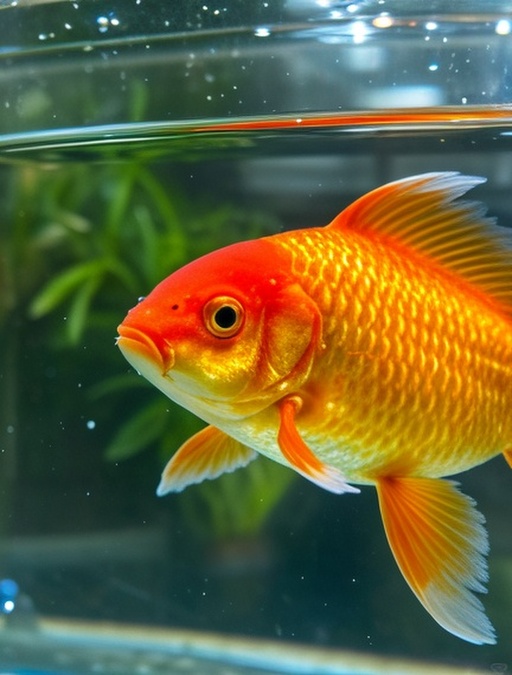
I can’t even count how many friends told me they got a goldfish for their kid’s birthday, tossed it in a $5 glass bowl from the dollar store, and were confused when it died 3 months later. Y’all, that’s not the goldfish being “fragile” — that’s the garbage advice floating around from unknowledgeable pet store workers who just want to sell you cheap, useless gear. I’ve kept goldfish for 12 years now, I currently have 3 fancy orandas and 2 common comets, the oldest one is 14 years old and still acts like a goofy little toddler begging for snacks every time I walk past the tank. Goldfish have so much personality, they recognize their owners, they do little tricks for food, and they’re way easier to care for once you stop following the bad myths.
First thing’s first, let’s talk tanks, because this is the #1 mistake new owners make. That tiny 1 gallon bowl? It’s literal torture for a goldfish. Even the smallest fancy goldfish grow to 6 inches long, and common comets can hit 12 inches easy. The rule of thumb is 10 gallons for your first fancy goldfish, add 5 gallons per extra fancy, and 30 gallons for a first common goldfish, add 15 gallons per extra common. After testing 7 different starter tank kits over the years, my top pick for fancy goldfish beginners is the Aqueon 10 Gallon LED Aquarium Kit. It comes with a super quiet adjustable filter (fancy goldfish hate strong current, it messes up their flowy fins and stresses them out), a dimmable LED light with day and night modes, and thick, leak-proof glass. The only downside? It doesn’t come with a water test kit, so you’ll have to grab that separately. If you’re getting common goldfish, go for the Marineland 40 Gallon Breeder Tank, it’s got tons of horizontal swimming space for these super active fast swimmers, and the included filter is powerful enough to handle their high waste output. I tried a no-name cheap 10 gallon kit for my first goldfish back in 2012, it leaked all over my desk after a month, ruined my college homework, never again, the extra $20 for a name brand kit is 100% worth it.
Next up, water care products, because goldfish produce a TON of waste, and bad water quality is the cause of 90% of goldfish sickness and early death. First, you absolutely need a water conditioner for every single water change — tap water has chlorine and chloramine that will burn your goldfish’s gills and kill them in hours if you don’t treat it. My ride-or-die pick is Seachem Prime Water Conditioner. It’s a bit more expensive than the generic stuff you see at the grocery store, but it works way better: it neutralizes chlorine, chloramine, heavy metals, and even temporarily locks up ammonia and nitrite for 48 hours if you have a sudden spike in your tank. A 100ml bottle costs like $8, and it lasts me 6 months even with weekly 20% water changes on my 2 tanks. I once had a filter break while I was out of town for 2 days, came home to 0.75ppm ammonia, dosed Prime, did a 20% water change, and all my fish were totally fine, would’ve lost all of them if I used the generic conditioner that only handles chlorine. The other must-have water product is the API Freshwater Master Test Kit. Those cheap test strips you see for $5? They’re so inaccurate, I once tested the same water with strips and got 0 ammonia, but the master kit showed 0.5ppm which was already making my oranda lethargic. The master kit lasts for 2+ years, tests for ammonia, nitrite, nitrate, and pH, and it’s the only test product I trust after all these years.
Let’s talk food, because bad food is the #2 cause of goldfish issues, especially swim bladder disease. You know those cheap floating flakes you see for $1 a container? Throw them out. Goldfish are omnivores, they need a mix of protein and veggies, and floating food makes them gulp air while they eat, which messes up their swim bladder (that’s the organ that helps them control their buoyancy) and makes them float upside down or sink to the bottom of the tank. My absolute favorite goldfish food is Hikari Sinking Goldfish Pellets. They sink slowly, so the fish eat them off the bottom without gulping air, they have the perfect 32% protein mix with added veggies like spirulina, and they don’t cloud the water like cheap flakes do. I used to feed my oldest oranda cheap flakes when I first got him, he had swim bladder issues every 2 months, I switched to Hikari pellets and he hasn’t had a single episode in 8 years. Pro tip: don’t overfeed! Only give them as much as they can eat in 2 minutes, once a day. I know it’s tempting to give them extra snacks because they beg so cute, but overfeeding leads to way too much waste, ammonia spikes, and sick fish. If you want to give them treats, blanched peas (take the skin off!) once a week is perfect, it helps with their digestion too.
Now for decor and accessories, the stuff that makes the tank look nice without hurting your fish. First, skip the small gravel substrate, goldfish love to nibble on everything, and small gravel can get stuck in their throat and choke them, I’ve had to help a friend pull a piece of gravel out of their goldfish’s mouth once, it was super scary. My go-to substrate is 1-2 inch smooth river rocks, they have no sharp edges to cut your goldfish’s flowy fins, waste doesn’t get stuck under them super easy, and they look really natural. For plants, skip the sharp plastic plants, they tear fancy goldfish fins super easy, which leads to fin rot. The best live plants for goldfish tanks are Anubias and Java Fern, they’re super hardy, don’t need fancy lights or CO2, and goldfish almost never eat them (my ryukin nibbles the edges sometimes but he never kills them, lol). They also help absorb extra nitrate from the water, which cuts down on how often you have to clean algae. If you don’t want live plants, go for soft silk plants, they’re gentle on fins and look just as nice as real ones.
Let me leave you with a few quick mistakes to avoid so you don’t have to learn the hard way like I did. First, don’t put your tank right next to a window, the sunlight makes algae grow like crazy, and the water temperature fluctuates a lot during the day which stresses your fish out. Second, don’t do 100% water changes all at once, that shocks the fish and kills the good bacteria in your filter that keeps the water clean, only do 20-30% water changes once a week. Third, let your tank cycle before you add fish! Cycling is the process of growing good bacteria in your filter that breaks down fish waste, it takes 4-6 weeks, I know it’s boring to wait with an empty tank, but it’s the difference between your fish living 3 months and 15 years. If your fish ever looks sick: lethargic, clamped fins, floating weird, white spots, test your water first! 9 times out of 10 it’s just an ammonia or nitrite spike, fix the water with a water change and Prime before you start dumping random meds in the tank, most meds do more harm than good if you don’t actually know what’s wrong with your fish.