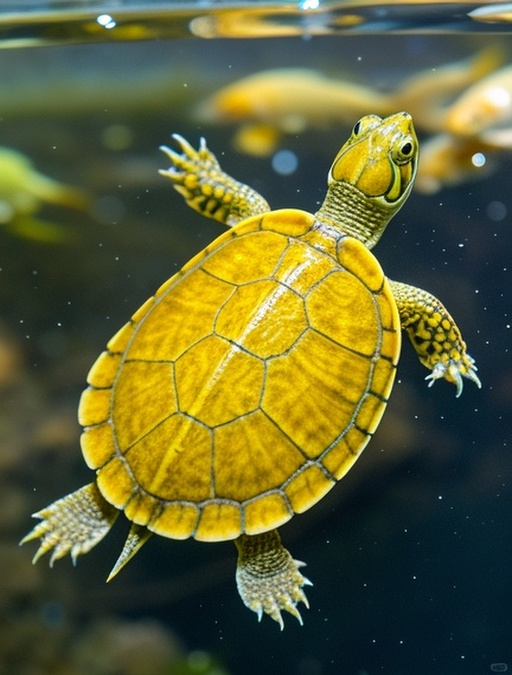
First off, let's talk about where these cuties come from. Yellow Pond Turtles are native to East Asia, mostly found in parts of China, Japan, Korea, and even some areas of Vietnam. In the wild, they hang out in slow-moving freshwater spots like shallow ponds, marshes, slow streams, and even rice paddies, ya know? They love places with lots of aquatic plants to hide in and flat rocks or logs to bask on when they wanna warm up. Adult Yellow Pond Turtles usually grow to between 5 and 8 inches long, with females being a little bigger than males most of the time. And here's a big heads up for new keepers: these guys live a LONG time. If you take care of 'em right, they can easily hit 30 to 40 years old, some even make it to 50. So getting one ain't a short term commitment, you gotta be ready to care for them for literal decades, okay?
Now for the fun part, what do they look like? The name Yellow Pond Turtle comes straight from their most noticeable feature: the bright yellow patches around their eyes, jaw, and sides of their neck. It's super hard to mix them up with other turtle breeds once you spot those yellow splotches. Their top shell, called the carapace, is usually a smooth dark olive green or brown color, with faint ridges along the top when they're young that fade as they get older. Their bottom shell, the plastron, is usually yellow or tan with dark brown or black markings on each scute. Young turtles have way brighter markings all over, but even as adults, that yellow head patch stays pretty obvious. If you wanna tell males and females apart? Males have thicker, longer tails, darker shells, and a slightly indented plastron. Females have shorter thinner tails, lighter shells, and a flat plastron that gives 'em space to carry eggs when they're breeding.
Wondering what their personality is like? You're in luck, these are some of the chillest, most docile aquatic turtles you can keep. They're way less skittish than breeds like red-eared sliders, and they get used to their owners really fast. After a few weeks of you feeding them, they'll probably swim right up to the tank glass when you walk in the room, wiggling their little heads like they're begging for snacks. One thing to remember though: they're not pets you wanna handle all the time. Too much time out of water stresses them out a lot, and they might get scared and nip you if you hold them too much. Only pick them up when you have to, like when you're cleaning their tank or checking them for health issues. If you have kids, make sure they know not to bother the turtle too much, okay?
Now let's get into the basic care stuff you need to know before bringing one home. First, tank size: don't cheap out on a tiny tank, these guys need space to swim. For one adult Yellow Pond Turtle, you need a minimum 40 gallon breeder tank, and if you wanna keep two, go for at least 75 gallons. They need two main areas in the tank: a swimming area that's at least twice as deep as their shell is long, and a dry basking area where they can climb out of the water completely to warm up. The water temperature should stay between 75 and 80 degrees Fahrenheit all the time, so you'll need a submersible aquarium heater to keep it consistent. The basking spot should be between 85 and 90 degrees, so you'll need a heat lamp for that. And the most important thing most new keepers forget? A UVB light. Turtles need UVB rays to absorb calcium, and without it, they'll get metabolic bone disease which causes soft shells, deformities, and even death. You gotta replace the UVB bulb every 6 to 12 months even if it still lights up, because the UVB output stops working long before the bulb burns out. Also, invest in a good canister filter, these turtles produce a lot of waste, and dirty water will lead to all kinds of health issues super fast. You should do a 25% water change every week even with a filter, to keep the water clean.
What do you feed these guys? Yellow Pond Turtles are omnivores, meaning they eat both meat and plants, but their diet changes as they get older. Juveniles under 2 years old need way more protein to grow, so their diet should be about 70% protein and 30% veggies. Adults over 2 years old need more plants, so flip that ratio to 70% veggies and 30% protein. A good base for their diet is high-quality commercial aquatic turtle pellets, make sure you get ones made for their age group. For protein, you can give them frozen or live bloodworms, brine shrimp, crickets, small feeder fish, or even cooked plain chicken every once in a while. For veggies, go for things like duckweed, water lettuce, romaine lettuce, chopped zucchini, carrots, or dandelion greens. Don't feed them processed human food, dairy, or bread, they can't digest that stuff at all. And don't overfeed them! Juveniles can eat once a day, but adults only need to be fed 2 to 3 times a week. Even if they give you that cute little begging look every time you walk past the tank, don't give them extra snacks, obesity is super common in pet turtles and causes all kinds of health problems like shell deformities and organ damage. You can dust their food with calcium powder every other feeding to make sure they're getting enough calcium, too.
What health issues should you watch out for? The most common one is shell rot, which happens when the water is dirty for too long. If you see white, fuzzy spots, soft spots, or discoloration on their shell, that's shell rot. First thing to do is fix your water quality, do a full water change and clean the tank, and if it's bad, take them to a reptile vet as soon as possible. Next common issue is respiratory infections, which usually happen when the water temperature is too low, or the basking spot isn't warm enough. Signs of a respiratory infection include floating lopsided in the water, blowing bubbles out of their nose, wheezing, or being extra lethargic. If you see these signs, turn up the water and basking temp a few degrees and get them to a vet right away, respiratory infections can kill turtles really fast if left untreated. Also, keep an eye out for swollen eyes, which is usually a sign of vitamin A deficiency, that's easy to fix by adding more veggies high in vitamin A to their diet, but check with a vet first if you're not sure.
Some fun little facts you might not know about Yellow Pond Turtles! First off, they're considered a symbol of longevity, good luck, and prosperity in a lot of East Asian cultures, so a lot of people keep them as good luck charms. Second, they can brumate (that's the reptile version of hibernation) in the wild when the water temperature drops below 50 degrees in the winter. If you keep them as indoor pets with consistent warm temperatures, they won't need to brumate, but if you keep them outside in a pond, they will brumate at the bottom of the pond during the cold months. Also, they're pretty social with other turtles of the same breed, so you can keep multiple together as long as your tank is big enough. Just keep an eye out for bullying, if one turtle is nipping another's tail or stealing all the food, you might need to separate them. And one super important rule: never ever release your Yellow Pond Turtle into the wild if you can't care for it anymore. They're considered an invasive species in a lot of parts of North America and Europe, and if they get into local waterways they can outcompete native turtle species for food and habitat. If you can't keep your turtle anymore, reach out to a local reptile rescue or an experienced hobbyist to take it in, don't just dump it in a pond.