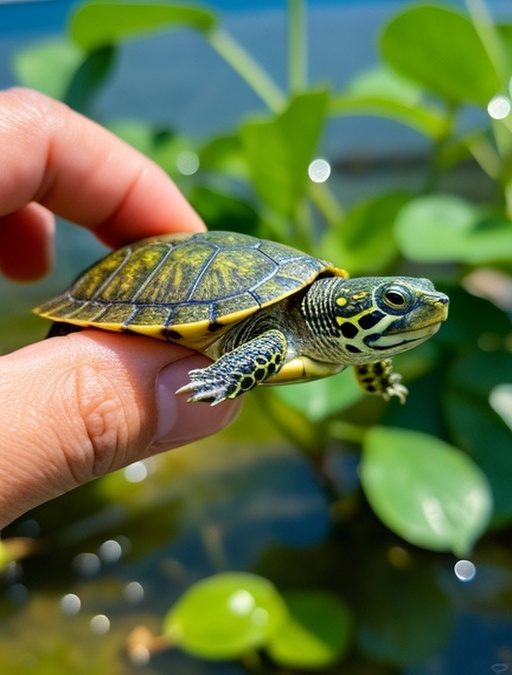
First off, let’s get one thing straight: you don’t need any fancy professional gear to train your turtle. The only thing you really need is their absolute favorite snack, a little patience, and consistent sessions. For Chinese three-keeled pond turtles, top reward picks are usually freeze-dried shrimp, tiny bits of cooked unseasoned chicken, or their favorite high-quality pelleted food. Skip the sugary or processed treats, those are bad for their digestion. Oh, and don’t train them when they’re cold or sleepy! They’re cold-blooded, so if their tank water is too cold or they haven’t had time to bask for an hour or so, they’ll be too sluggish to care about snacks or training. The best time is usually 30 minutes after they finish their regular daily basking, that’s when their energy is highest. Don’t stress if your turtle acts like he’s got better things to do the first few sessions, that’s just turtle vibes, they’re not being rude, they just take time to warm up.
The first and most useful training you can teach your turtle is target training, it’s the base for almost every other trick or behavior you want to teach later. Grab a cheap popsicle stick, and draw a bright red dot on the end (turtles see bright colors really well, so red works perfect). Hold the dot about an inch in front of your turtle’s nose, and wait. If they nudge the dot with their nose or mouth, give them the tiny treat immediately, and say a short cue word like “come” or “target” — keep it one syllable so it’s easy for them to recognize. Don’t get discouraged if they don’t get it the first few sessions! Most turtles take 3 to 5 days to even realize the stick is connected to treats. Keep sessions super short, 3 to 5 reps max per day, no longer than 5 minutes total. Once they get the hang of nudging the stick for a treat, you can start moving the stick further away, first across the tank floor, then up to the tank edge. I’ve seen trained turtles swim all the way across a 75 gallon tank in 2 seconds flat when they see that target stick, it’s wild.
After they master target training, the next super useful behavior is training them to be comfortable with handling. A lot of Chinese three-keeled pond turtles are super skittish when you first bring them home, some will even nip or pee when you pick them up out of fear, which makes health checks and tank cleaning a total pain. To train this, start slow: first, just stand next to the tank when you feed them, so they get used to your face and your smell. After a week or so, you can dip a clean finger (make sure there’s no soap or lotion residue on it, that’s toxic to turtles!) into the water and hold the treat on your finger, let them eat right off you if they’re comfortable. Once they’re okay with that, start lifting them out of the water for just 2 to 3 seconds at a time, then put them right back and give them a treat. Gradually increase the time you hold them, first 10 seconds, then 30, then a full minute. Never hold them upside down, that’s super stressful for them, and always support their whole body so they don’t feel like they’re going to fall. Most turtles get fully comfortable with handling in 3 to 4 weeks, no more nipping or squirming!
Wanna teach them fun little tricks once they have the basics down? You totally can! I’ve had clients train their three-keeled pond turtles to push a tiny plastic ball into a mini soccer goal, climb up a small ramp to their basking spot on command, and even tap the tank glass twice when they want a snack. The only rule here is to keep every session low pressure. If your turtle is ignoring you or trying to swim away, end the session right away, don’t force them. Turtles have tiny attention spans, and if you push them too hard, they’ll start associating training with stress and refuse to participate at all. And remember, there’s no such thing as “punishing” a turtle for not getting a trick right. They don’t connect scolding or being put back in the tank with bad behavior, it’ll just make them scared of you. Stick to only positive reinforcement, all treats, all good vibes every time you train.
Let’s talk about the most common mistakes new turtle owners make when training, so you can avoid them. First off, giving treats that are too big. If you give them a whole shrimp on the first rep, they’ll be full and won’t want to do any more training. Keep every treat the size of their eyeball, that’s the perfect small reward that keeps them motivated. Second, using inconsistent cues. If you say “come” one day, “here turtle” the next, and just make kissy noises the third day, they’ll get super confused and won’t know what you want. Pick one short cue word for each behavior, and make sure everyone in your house uses the same word too. Third, training when their tank parameters are off. If their water is too cold, or their basking spot is too hot, or the water is dirty, they’ll be stressed and won’t care about training at all. You have to make sure their basic care is perfect first before you even think about training, that’s non-negotiable.
A lot of people ask me why they should even bother training a turtle, since they’re not like dogs that can fetch or do cool party tricks. Let me tell you, the benefits are way bigger than just showing off. First, it makes daily care so much easier. If your turtle comes to the edge of the tank when you give the target cue, you don’t have to chase them around the tank to get them out for a health check or to clean the filter. If they’re comfortable being handled, vet visits are 10x less stressful for both of you, no more wrapping them in a towel to keep them from squirming. Also, you’ll get to see so much more of their personality once you start training. My own three-keeled pond turtle does a little silly wiggle with his front legs when he sees me grab the target stick, it’s the cutest thing I’ve ever seen. You’ll realize your turtle isn’t just a boring rock that swims around, they have their own little likes and dislikes and quirks.
Last thing I want to say is be patient. Every turtle learns at their own pace. Some super food-motivated turtles will master target training in 3 days, some more laid back ones might take 3 weeks, that’s totally normal. Don’t compare your turtle to other people’s turtles online, every single one has their own personality. Some will love learning new tricks, some would rather just sunbathe and eat snacks all day, and that’s okay. The point of training isn’t to make your turtle a circus performer, it’s to spend quality time with them and make their life (and yours) a little easier. Even if all they ever learn is to swim to you for a treat, that’s a huge win!