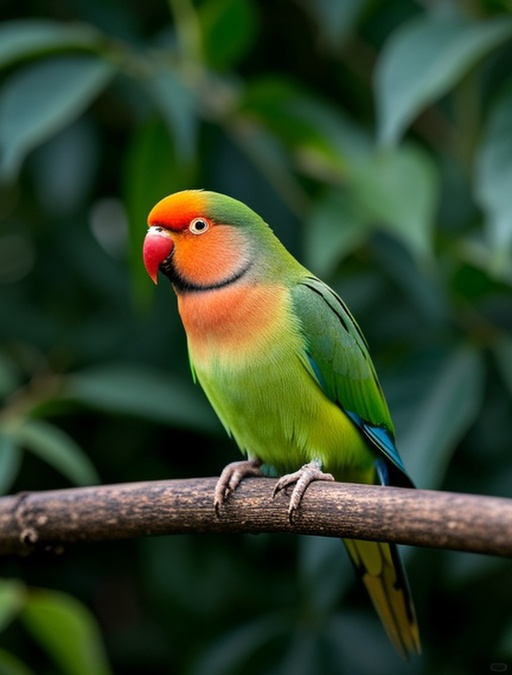
So, what exactly is a Lovebird? Well, they're a type of small parrot, and the name says it all. They're famous for forming incredibly strong, monogamous bonds with their mates. You'll often see them snuggled up together, preening each other's feathers – it's the sweetest thing! But don't let their cuddly reputation fool you. These birds pack a big personality into a small body. They're curious, playful, and can be quite the little clowns.
There are actually several different species of Lovebird, each with their own unique look. The most common ones you'll find as pets are the Peach-faced Lovebird, with its stunning green body and peachy-orange face, and the Fischer's Lovebird, which is a rainbow of green, yellow, and orange. Then you've got the Masked Lovebird, looking like it's ready for a fancy dress party with its black head. No matter the color, they're all absolutely gorgeous.
Now, let's talk about their personality, because oh boy, do they have one! Lovebirds are super social and intelligent. They thrive on interaction and can get pretty lonely if left alone for too long. That's why many experts recommend getting a pair – so they can keep each other company. They love to play! You'll need to provide lots of toys: swings, ladders, bells, and things they can shred. A bored Lovebird is a mischievous Lovebird, and they might start chewing on things they shouldn't, like your favorite book or the furniture trim.
One thing you gotta know – they can be loud. They don't just chirp; they have a whole range of squawks, tweets, and chatter. It's not usually as ear-piercing as a larger parrot, but it's definitely noticeable. They use their voices to communicate happiness, alert you to "dangers" (like the mailman!), or just to get your attention. Some can even learn to mimic a few words or sounds, though they're not known as the best talkers in the parrot world.
Caring for a Lovebird is a big commitment, but so rewarding. They need a spacious cage, way bigger than you might think for such a small bird. They need room to fly and play! Their diet shouldn't be just seeds. A high-quality pellet food is great, mixed with fresh veggies like chopped broccoli, carrots, and leafy greens, and a little bit of fruit as a treat. Fresh water every day is a must. And remember, they need time out of the cage every day to stretch their wings and bond with you.
Thinking about getting one? Here's the real talk. Lovebirds can live for 15 to 20 years with proper care. That's a long-term friend! They require daily attention, a clean environment, and regular vet check-ups with an avian specialist. They're not just a decoration; they're a companion. If you're ready for a lively, affectionate, and sometimes sassy little friend who will fill your home with color and chatter, a Lovebird might just be your perfect match. Just be prepared to fall in love!