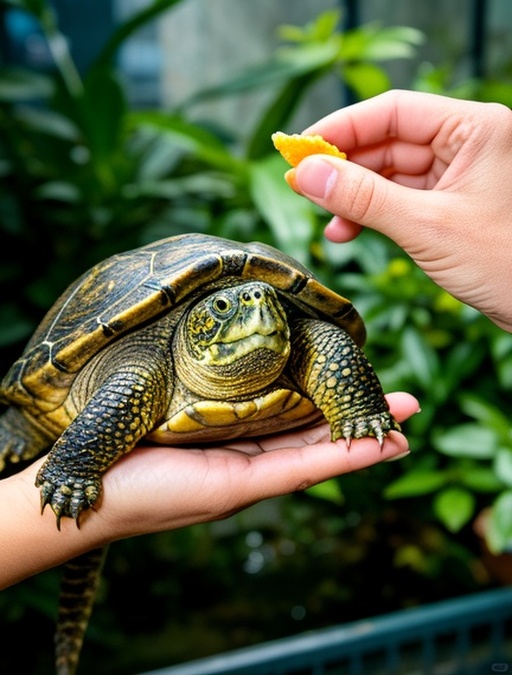
First off, let’s get one myth out of the way: Mexican Giant Musk Turtles absolutely can be trained, but we’re not talking about teaching them to roll over or give you a high five like a dog. Their training is all about reducing stress responses and making routine care easier for both of you. These turtles evolved to remember reliable food sources in the wild, so positive reinforcement (aka giving them a treat when they do the thing you want) works incredibly well for them. You never, ever want to use punishment with these guys, by the way. If they bite you or musk you, it’s not because they’re being “bad” — it’s because they’re scared. Yelling at them, tapping their shell, or locking them in their hiding spot will only make them associate you with bad stuff, so they’ll hide more, act more aggressive, and make care way harder down the line.
The first and most useful training you can do is teach them to take food from your hand without biting. A lot of new owners get nipped in the first few months, and it’s almost always avoidable with a little slow training. First, give your turtle 2 to 3 weeks to settle into their new tank before you try any training at all. Let them get used to their hiding spots, their fixed feeding area, and the sound of you walking around the tank. Once they don’t dart away when you stand next to the glass, you can start. Grab their favorite treat — earthworms, frozen shrimp, or smelly commercial turtle pellets work best, since these guys hunt by scent. If you’re nervous about getting bit at first, use plastic feeding tongs, no shame in that. Hold the treat just above the water surface near their feeding spot, don’t wiggle your hand or the tongs fast, that’ll make them think your fingers are prey. If they snap at the air, just hold still, don’t jerk away. Do this every single feeding time, and after 1 to 2 weeks, they’ll learn that your hand near the tank means food, not danger. Once they’re comfortable with tongs, you can slowly switch to holding the treat between your thumb and forefinger, rest the back of your hand on the tank edge so you don’t flinch if they move fast. I got bit once the first month I had my turtle because I wiggled my finger to get his attention, total my fault, don’t make that same mistake.
Next up, train them to be comfortable being handled for health checks and tank cleans. There’s nothing worse than having to chase a stressed, snapping turtle around the tank when you need to siphon the substrate or check for shell rot, so this training is a game changer. Don’t start this until they’re already fully comfortable with hand feeding, you don’t want to rush them. Start small: when they’re eating their meal, gently tap the top of their shell once, then pull away and give them an extra little treat. Do this for 3 to 4 days, then rest your whole hand on their shell for 2 seconds while they eat, then give another treat. Slowly work your way up to lifting them just an inch out of the water, then setting them right back and giving a treat. Over 4 to 6 weeks, you can build up to holding them for 10 seconds, then 30, then a full minute. Always support their whole body when you hold them, don’t just grab the edge of their shell — that scares them, they’ll flail their legs and can even injure their spine. If they start hissing, musking, or trying to snap at you, put them back immediately, you pushed too fast. Go back to the last step they were comfortable with for a few days before you try again.
You can also train them to respond to a simple cue, like coming to the feeding area when you tap the tank. These guys don’t hear super well, but they pick up on vibrations and visual cues really easily. All you have to do is tap the side of the tank twice, right before you give them their food every single time. After 2 to 3 weeks, you’ll notice that as soon as you tap twice, they’ll swim right out of their hiding spot to the feeding area, even if you haven’t pulled the food out yet. This is super useful if you want to check if they’re okay, or get them to move to one side of the tank so you can clean the other side without disturbing their hiding spot. Some people use a small clicker, same as dog training, for this too — click right before you give a treat, and they’ll learn the click means food is coming. I tried this with my guy, and it works way better than I thought, he even swims over to greet me when I walk up to the tank now, no tap needed half the time.
Now let’s go over the most common mistakes people make when training their Mexican Giant Musk Turtle, so you can avoid them. First, don’t rush the process. Every turtle has their own personality, some will take 3 weeks to get comfortable with hand feeding, others will take 3 months, that’s totally okay. Pushing them faster than they’re comfortable with will just set back your progress and make them scared of you. Second, don’t train them when they’re not hungry. If they just ate a big meal, they don’t care about treats, so they won’t pay attention to you. Save all training sessions for right before their regular feeding time, when they’re already actively looking for food. Third, don’t overfeed them during training. Those extra little treats add up fast, and Mexican Giant Musk Turtles are super prone to obesity, which leads to all sorts of health problems. Cut back a little bit on their regular meal size on days you do a lot of training with extra treats. Fourth, don’t train them if their tank parameters are off, or they’re sick. These are ectotherms, so if their water temp is below the recommended 75 to 80 degrees Fahrenheit, they’re sluggish, have no appetite, and won’t be in the mood to learn anything. If they’re acting lethargic, not eating, or have discolored shell, hold off on training until you get them checked out by a reptile vet.
At the end of the day, training your Mexican Giant Musk Turtle isn’t about showing off cool tricks to your friends. It’s about making their life less stressful, and making your life as an owner way easier. You won’t have to chase them around the tank to move them for cleaning, you won’t get bit every time you feed them, and you’ll even be able to tell when they’re feeling sick because they stop responding to their cues like they usually do. It’s a total win-win for both of you, and it’s way easier than you think once you get started. Just be patient, bring lots of snacks, and go at your turtle’s pace, and you’ll see progress before you know it.