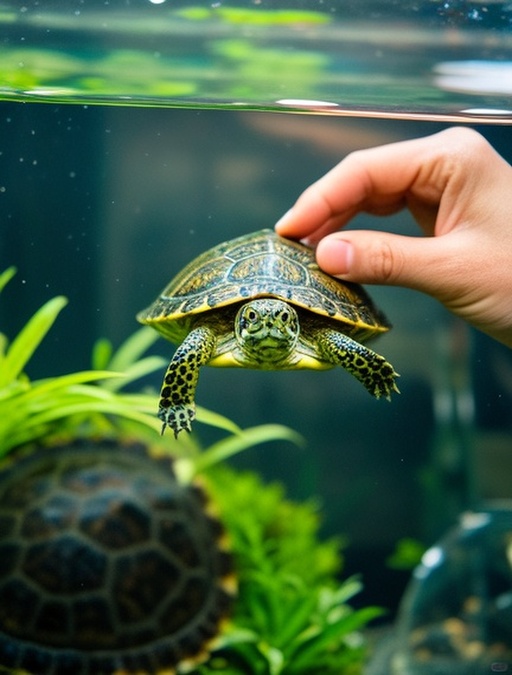
First things first, you can’t train a turtle that’s scared of you, so step one is always building trust. I’ve seen so many new owners try to pick up their Indian Roofed Turtle the day they bring it home, and then get discouraged when it hides in its shell for hours, that’s just not how it works. These guys are naturally skittish around big, loud humans at first, so take it slow. For the first week or two, just sit next to their tank for 10 to 15 minutes a day, no sudden movements, no tapping on the glass (that stresses them out so bad, trust me). Talk to them in a soft, calm voice even if you feel silly doing it, they’ll start to recognize your voice and associate it with safety after a while. Once you notice they don’t dart away when you approach the tank, you can start offering treats from the tip of your finger, hold a piece of their favorite snack, like a frozen bloodworm or a tiny piece of shrimp, just above the water line and wait for them to come take it. Don’t yank your hand away if they nibble your finger by accident, they have bad eyesight, it’s not a bite on purpose. Just make sure you wash your hands super thoroughly before and after interacting with them, for both your safety and theirs.
Once your turtle is comfortable around you, the easiest first training task is target training, and it’s way more useful than it sounds. All you need for this is a small, colorful target— I use a regular plastic chopstick with a bright red sticker on the end, you can use anything that stands out against the tank water and decor. Hold the target about an inch in front of your turtle’s face, when they lean in or nudge the target with their nose, give them a treat right away, and maybe say a short verbal cue like “come” if you want. Keep sessions super short, 5 minutes max, 2 times a day, because Indian Roofed Turtles have really short attention spans, they’ll get bored and swim away if you drag it out too long. After 3 or 4 days of repeating this, you can start moving the target further away, make them swim across the tank to touch it, or even climb up their basking platform to get to it. After a couple weeks, most turtles will respond to the target (or even just your verbal cue) from anywhere in the tank. This is a lifesaver if your turtle ever hides under decor when you need to clean the tank, or if you accidentally let them wander out of their play area, you don’t have to chase them around and stress them out, just pull out the target and they’ll come right to you.
The next most useful training you can do is teaching your Indian Roofed Turtle to eat in a single fixed spot, and let me tell you, this will cut your tank cleaning time in half. So many owners complain that their turtle drags food all over the tank, leaves half-eaten shrimp under rocks, makes the water get cloudy and stinky after just 2 days. This training fixes that completely. First, pick a small, shallow plastic dish and put it in the same exact spot in the tank every time, I recommend putting it on a flat spot on the substrate away from the filter so food doesn’t get swept away. Every feeding time, put all their food only in that dish, and use the target you used for earlier training to guide them right to the dish before you give them their first treat. At first, they might get confused and swim away looking for food, don’t leave extra food scattered around the tank to appease them. If they don’t eat from the dish within 20 minutes, take all the food out and try again at their next scheduled feeding. They’re not gonna starve if they miss one meal, I promise, and they’ll catch on really quick. Most Indian Roofed Turtles figure this out in 7 to 10 days, after that they’ll swim straight to the feeding dish the second they see you walk up to the tank, no more mess, no more digging around the tank looking for rotting food scraps.
A lot of people also want to train their Indian Roofed Turtle to be comfortable with being handled, which is totally doable as long as you take it slow. These guys hate being picked up at first, it makes them feel like they’re being attacked by a predator, so don’t rush this step. Start by just gently touching the top of their shell while they’re in the water, don’t lift them at all, do this for a few days until they don’t pull away when you touch them. Next, gently cup your hand under their belly and lift them just an inch or two above the water, hold them for 2 seconds, then put them right back and give them a treat. Slowly increase the amount of time you hold them over the course of a week, then you can start lifting them out of the tank for short periods, always support their entire body, never ever lift them by their tail, that can seriously injure their spine, that’s a super common mistake new owners make. If they start hissing, pulling their head and legs tight into their shell, or wiggling like crazy to get away, put them back immediately, don’t force it, that will just set back your progress. Once they’re okay with being held, you can let them walk around on a clean towel on your lap for 10 or 15 minutes at a time, it’s such a fun bonding activity, my own Indian Roofed Turtle Mango loves crawling around on my arm and stealing tiny pieces of watermelon from my hand when we do this.
Now let’s talk about the common mistakes you need to avoid if you want your training to work. First off, never use punishment, ever. Turtles don’t understand the concept of being punished, if you yell at them or tap their shell when they do something you don’t like, all they’ll learn is that you’re scary, and they’ll stop cooperating with you entirely. Positive reinforcement is the only thing that works, every time they do the thing you want, give them a treat, praise them, make it a good experience. Second, don’t make training sessions too long, like I said earlier, 5 to 10 minutes max, 2 times a day is perfect, any longer and they’ll get frustrated and lose interest. Third, be consistent, train at the same time every day, use the same verbal cues every time, keep the target the same, don’t swap out treats every day unless you notice they’re getting bored of the one you’re using. And last, don’t compare your turtle’s progress to other people’s turtles, every single one learns at their own pace. I’ve had some Indian Roofed Turtles pick up target training in 2 days, and others took 3 whole weeks, that’s totally normal, don’t get discouraged if yours is a little slow, it’s all part of the fun.
At the end of the day, training your Indian Roofed Turtle isn’t just about teaching them cool tricks to show off to your friends, it’s really good for their mental health too. These guys are smart, they get bored swimming around the same tank every day with nothing to do, training gives them a fun little challenge, keeps them mentally stimulated, and makes them overall happier and healthier. A lot of owners I talk to say their trained turtles will swim right up to the glass to greet them when they get home, which is honestly the cutest thing ever, you’d never expect a turtle to be that responsive. It’s such a rewarding experience, and it’s way easier than most people think, you just need a little patience and a lot of tasty treats.