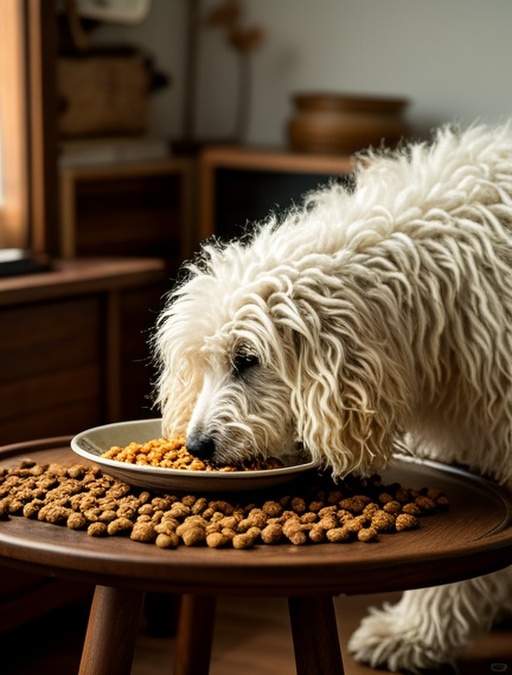
Alright, let's start from the beginning – the Komondor puppy. These little guys grow like weeds! For the first year, you're gonna want a high-quality, large-breed puppy formula. This stuff is specially made to support controlled growth, which is crucial to protect their developing joints. Don't fall for the 'all-you-can-eat' trap. Free-feeding, or leaving food out all day, is a big no-no for this breed. It can lead to obesity and messy eating habits (imagine kibble stuck in those cords… yikes!). Stick to measured meals, usually three to four times a day. Your vet can give you the perfect portion size, but as a rough guide, follow the recommendations on your premium puppy food bag and adjust based on your pup's body condition. You should be able to feel their ribs without seeing them.
Now, when your Komondor graduates to adulthood (around 12-18 months), it's time to switch to an adult large-breed dog food. Protein is key here – look for a real meat, like chicken, lamb, or fish, as the first ingredient. They need that protein to maintain their impressive muscle mass. But remember, an adult Komondor is actually a bit of a couch potato indoors. They were bred to guard livestock, which means long periods of rest followed by bursts of action. So, their calorie needs aren't as sky-high as you might think. Overfeeding is the number one mistake owners make. A fat Komondor is an unhealthy, unhappy Komondor with extra stress on their heart and joints. Two measured meals a day is the golden rule for adults.
Let's talk about the elephant in the room – or should I say, the mop in the kitchen? That iconic corded coat. Feeding time can get messy. I highly recommend using a snood (a fabric tube that goes over their head and ears) or simply tying their cords back during meals. A raised feeding station is also a game-changer. It promotes better posture for eating and drinking and helps keep water and food from soaking into the cords around their chest and neck. Trust me, cleaning dried, slobbery kibble out of cords is nobody's idea of fun. For water, a large, tip-proof bowl is essential. Some folks even use a bucket secured to a wall!
As your loyal guardian enters their senior years (around 7-8 years old), their metabolism will slow down. It's time to consider a senior formula that's easier to digest and has joint supplements like glucosamine and chondroitin already in it. Keep an eye on their weight and dental health. Senior dogs might need softer food or smaller, more frequent meals. Regular check-ups with your vet will help you adjust their diet perfectly for this golden stage of life.
What about treats and human food? Treats are great for training and bonding, but they should make up no more than 10% of their daily calories. Choose healthy options like small pieces of carrot, apple (no seeds!), or commercial treats designed for large breeds. Never, ever give them cooked bones, chocolate, grapes, onions, or anything with xylitol (a common sweetener). It's toxic. As for supplements, don't just start adding things willy-nilly. If you're feeding a high-quality, complete dog food, they likely don't need extra vitamins. However, many Komondor owners find that a fish oil supplement does wonders for maintaining healthy skin under all those cords and gives their coat a nice shine. Always chat with your vet before starting any new supplement.
In the end, feeding your Komondor is about consistency, quality, and a little bit of common sense. Pay attention to your dog. A shiny coat, good energy, and firm stools are signs of a good diet. If they're gaining too much weight, cut back a little. If they seem lethargic, maybe they need a different protein source. It's a partnership. By putting a little extra thought into what goes into their bowl, you're investing in many, many years of companionship with your magnificent, mop-headed best friend. They protect your home, the least we can do is fuel them right!