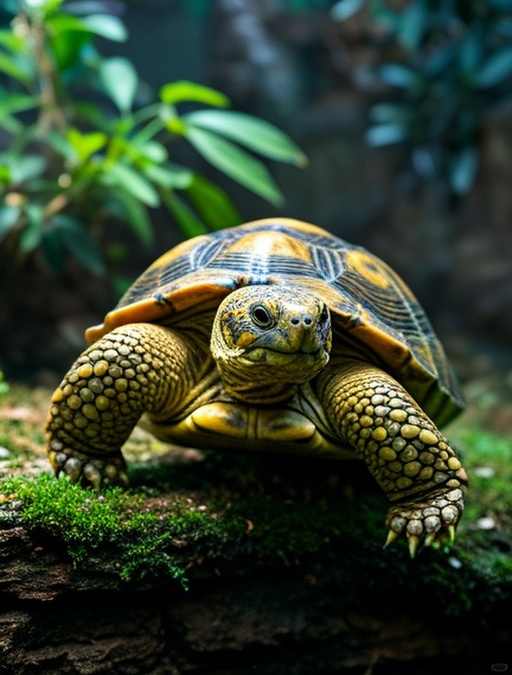
First things first, let's clear up the name. 'Impressed Tortoise' – sounds fancy, doesn't it? It's not that they're easily wowed by your dance moves (though they might be, in their own slow way). The name actually refers to the beautiful, intricate patterns on their shells that look like they've been carefully impressed or carved. We're talking about the Elongated Tortoise (*Indotestudo elongata*), a stunning species native to Southeast Asia. Their shells are a masterpiece of nature, with those signature dark, radiating patterns on a lighter background. It's like they're wearing a piece of art 24/7!
Now, before you rush out to get one, let's talk reality. These guys are a commitment. We're talking a potential lifespan of 30 to 50 years, maybe even longer with awesome care. That's a buddy for life, literally! They're not cuddly puppies, but they have their own charm. They're generally docile, curious in a slow-motion kind of way, and once they get used to you, they can become quite personable. Watching them methodically explore their enclosure or munch on some greens is weirdly therapeutic. It's like having a living, breathing piece of zen in your living room.
Alright, let's get practical. Housing is job number one. An 'Impressed Tortoise' needs space. A lot of it. For an adult, think a custom-built wooden tortoise table or a very large, secure indoor enclosure—aim for at least 4 feet by 8 feet. Outdoors is even better if you have a safe, predator-proof garden in a warm climate. They need a proper gradient of heat: a basking spot around 90-95°F (32-35°C) and a cooler end around 75-80°F (24-27°C). UVB lighting is NON-NEGOTIABLE. It's as crucial as food and water for their shell and bone health. Without it, they can develop serious, painful metabolic bone disease. So, invest in a high-quality UVB tube light and replace it every 6-12 months, even if it still turns on.
What's on the menu? Good news: they're mostly herbivores! Their diet should be high in fiber and calcium and low in protein and fat. Think a wide variety of dark, leafy greens: dandelion greens, endive, escarole, mustard greens, and occasional treats like hibiscus flowers or opuntia cactus pads. You can sprinkle their food with a calcium supplement (without phosphorus) a couple of times a week. Fruits should be very rare treats—too much sugar is bad for their gut. And always, always provide fresh, clean water for drinking and soaking. A shallow dish they can climb into is perfect for hydration and helping with humidity.
Let's chat about health and common issues. A healthy 'Impressed Tortoise' should have clear, bright eyes, a firm shell (no soft spots!), and be active and alert for a tortoise. Keep an eye out for runny nose or eyes (could be a respiratory infection), lack of appetite, or lethargy. The biggest health pitfalls are usually related to poor husbandry: incorrect temperatures, lack of UVB, or a bad diet. Finding a vet who specializes in reptiles (an exotics vet) *before* you have an emergency is one of the smartest things you can do. Regular check-ups and fecal exams for parasites are a great idea too.
Is the 'Impressed Tortoise' right for you? Ask yourself these questions: Can I provide a large, specialized enclosure for decades? Am I ready for the upfront costs (enclosure, lights, heat sources) and ongoing costs (food, substrate, vet bills)? Do I want a pet that's more about observation than interaction? If you answered yes, and you're fascinated by their ancient, graceful demeanor, then you might just have found your perfect match. They're not for everyone, but for the right person, they are an incredibly rewarding and impressive pet that teaches patience and the beauty of a slower pace of life.