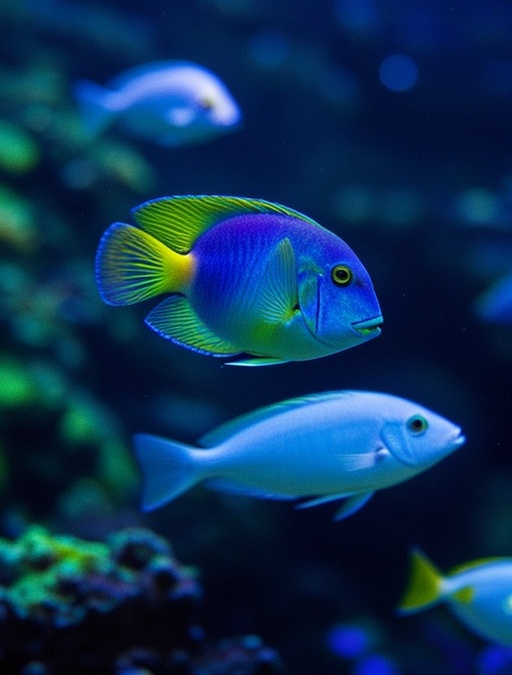
So, picture this. I'm sittin' by my 120-gallon reef tank, just sippin' my morning coffee, when I see my Six Line Wrasse, who I've affectionately named 'Ziggy,' doin' something downright bizarre. He's not swimmin'. He's not peekin' out from the live rock. Nope. He's buried himself completely in the sandbed for his nightly snooze, and now he's just... poppin' his little head out. Like a periscope! He stayed like that for a good ten minutes, just swiveling his head around, checkin' out the neighborhood. I nearly spilled my coffee laughin'. It's these little moments that make you realize these fish are so much more than just pretty colors. They've got routines, quirks, and behaviors that are downright entertainin'.
And don't even get me started on their role as the tank's cleanup crew. I used to have a bit of a flatworm problem. Nothing too serious, but enough little white specks to bug me. Enter 'Moe,' my Melanurus Wrasse. I swear, that fish saw the flatworms as an all-you-can-eat buffet. Within a week, the tank was spotless. It was like having a tiny, efficient, and very hungry janitor on duty 24/7. The best part? He did it with such gusto, darting around, pecking at the rocks. You could almost see the satisfaction. It's a fantastic, natural way to handle pests, and it's so rewarding to watch them work.
Now, wrasses can be a bit... opinionated about their tankmates. I learned this the hard way when I introduced a new, timid firefish. My Six Line, Ziggy, decided he was the sheriff of Tank Town, and the firefish was an unwanted newcomer. There was some chasing, nothing too violent, but enough to stress the poor firefish out. It taught me a super important lesson: research and quarantine! Not all wrasses play nice, especially in smaller tanks. You gotta think about their personality. Some, like the peaceful Fairy Wrasses, are total sweethearts. Others, like some of the Pseudocheilinus species, can be real bullies. It's all about choosin' the right wrasse for your tank's community vibe.
One of the coolest things, though, is watchin' them change. I'm not just talkin' about growin' bigger. I'm talkin' about their wild color transformations as they go from juvenile to adult. It's like watchin' a caterpillar turn into a butterfly, but underwater. My juvenile Coris Gaimard (Yellowtail Coris) started life as a bright orange and white little guy. Now, as an adult? He's a stunning masterpiece of green, blue, and red, with that iconic yellow tail. Every few months it seemed like he added a new splash of color. It's a long-term reward that makes the hobby so special. You're not just keeping a fish; you're witnessing its entire life story unfold right in your living room.
Caring for them is pretty straightforward, but they do have their needs. That sandbed Ziggy loves to bury in? It's not just a cute habit; it's a necessity for many wrasses to feel safe and sleep soundly. A tank without a fine sand substrate can be a major stressor for them. And their diet! These guys are active, so they need to eat well. A mix of high-quality frozen foods like mysis shrimp and brine shrimp, some pellets, and even the occasional treat of live food will keep them healthy and their colors poppin'. A hungry wrasse is a sad wrasse, and we don't want that.
At the end of the day, having a wrasse is like adding a spark of constant motion and curiosity to your aquarium. They're interactive, beneficial, and endlessly fascinatin'. Sure, they might rearrange a small coral frag now and then in their endless hunt for food, or give the new guy the stink-eye for a day or two. But the joy they bring, the natural behaviors they display, and the sheer beauty they add are worth every second. They remind us that an aquarium isn't just a static picture; it's a dynamic, livin', breathin' ecosystem full of personalites. So, if you're thinkin' about addin' one to your tank, do your homework, but don't hesitate. Just be ready for a fish that's gonna make you smile, laugh, and look at your tank in a whole new way.