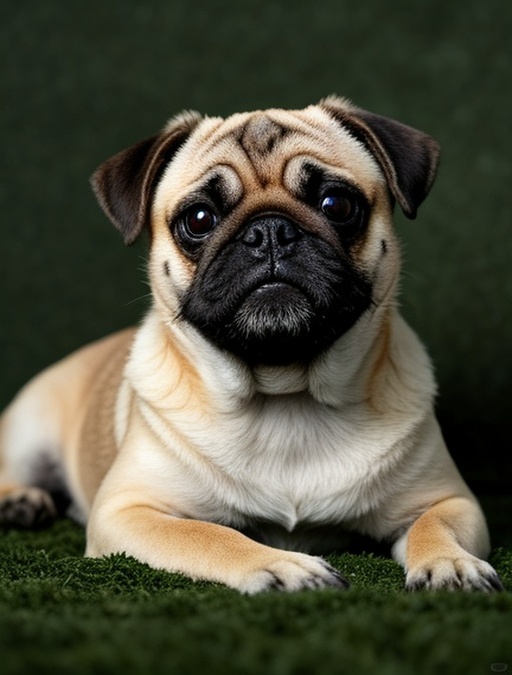
Let's start at the very beginning, shall we? Pugs have a history that's fancier than most royalty. We're talking ancient China, where they were the treasured companions of emperors. They lived in palaces, people! That's why they still have that 'I deserve the best' attitude. They made their way to Europe and became the darlings of Dutch royalty and even caught the eye of Napoleon's wife, Josephine. So, when your Pug looks at you with those big, soulful eyes, remember: you're basically housing a tiny, four-legged aristocrat. It explains a lot about their demands for lap space and treatos.
Now, onto the looks. You can't miss a Pug. That squished, wrinkly face is their trademark. Those deep wrinkles on their forehead? Some say they look like the Chinese character for 'prince' – how fitting! Then there are those huge, dark, bulging eyes that see straight into your soul (and also see every crumb you drop). Their coat is short and smooth, coming in fawn or black, and it's deceptively sheddy. Oh, and that curly little tail? It's like a happy, coiled spring. But the real soundtrack of life with a Pug is the noise. The snorting, the wheezing, the grunting, the occasional epic snore. It's not a quiet breed, but you get used to the symphony.
Alright, personality time. If you want a guard dog, look elsewhere. A Pug's main job is to be your shadow and your comedian. They are famously clownish, loving nothing more than to make you laugh with a silly head tilt or a goofy 'Pugtona' (that's when they zoom around the house for no reason). They are incredibly affectionate, often described as 'velcro dogs' because they stick to your side. They're great with kids, other pets, and pretty much anyone who offers a belly rub. But here's the thing: they can be stubborn. That ancient royal blood means they have minds of their own. Training requires patience, consistency, and really, really good treats. They're not dumb; they're just selectively brilliant.
This is the serious part, folks. Pugs are a brachycephalic breed (flat-faced), and that cute face comes with some health considerations. Their short noses mean they can have breathing problems (Brachycephalic Obstructive Airway Syndrome - BOAS). They snore, they snort, and they can overheat easily. Never, ever exercise them in hot weather. Those big, beautiful eyes are prone to injuries and conditions like dry eye. Their deep wrinkles need daily cleaning to prevent nasty infections. And, like many small breeds, they can have issues with their hips (Legg-Calve-Perthes disease) and their soft palates. Finding a responsible breeder who tests for these things is absolutely crucial. It's not to scare you, but to prepare you. A healthy Pug is a happy Pug.
So, what's day-to-day life like? Exercise? A couple of short walks and some playtime indoors is plenty. They are the ultimate apartment dogs. Grooming is more than you'd think. That short coat sheds like crazy, so regular brushing is a must. Wrinkle cleaning is a daily ritual – a soft, damp cloth followed by a dry one to keep the folds clean and dry. Dental care is huge, as small dogs are prone to gum disease. And diet? Pugs love food. Like, *really* love food. It's easy for them to become little potatoes, so portion control and a high-quality diet are key to keeping their weight in check and their joints healthy.
Is a Pug the right dog for you? Let's break it down. Perfect for you if: you want a hilarious, loving companion who's low-energy and great in small spaces. You don't mind some snoring and shedding. You're home a lot and want a cuddle buddy. You're committed to their special health needs. Maybe think twice if: you need a jogging partner or a highly athletic dog. You want a quiet, low-maintenance groomer. You're away from home for long hours regularly. You're not prepared for potential vet bills. They are a big commitment in a small, snorty package.
Bringing your Pug home is just the start. Early socialization and puppy classes are golden. Teach them that handling their paws, face, and mouth is normal – it'll make vet visits and grooming so much easier. Crate training is a lifesaver for housebreaking and giving them a safe den. And remember, positive reinforcement is the only way to go. They respond to love and snacks, not harshness. The most important thing? Shower them with love. They live for your attention. In return, you'll get a loyal, funny, endlessly entertaining friend who will fill your life with more joy and laughter than you can imagine. Just be ready for the snorts.