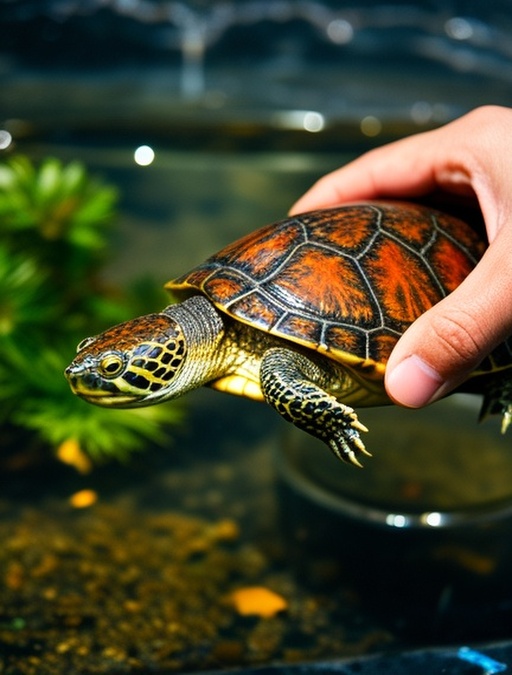
First things first, you gotta understand where your Red-headed Amazon River Turtle is coming from. In the wild, they're used to the vast Amazon basin – lots of space, places to hide, and a steady routine based on sun and water. In your home, everything is different. They might seem shy or even skittish at first. That's totally normal! Training starts with patience. Don't try to force interactions. Just sit by their tank regularly, move slowly, and let them get used to your presence. Over days and weeks, they'll start to recognize you as part of their environment, not a threat. This is the foundation of all training: trust. If your turtle hides every time you walk by, you can't teach it anything.
Now, about feeding time – this is your secret weapon for training! These turtles are food-motivated, which is great for us. Start by establishing a consistent feeding schedule. Same time, same place. Use a specific container or spot in the tank for food. After a while, they'll associate that spot with mealtime. Next, try hand-feeding with tongs. Hold a piece of their favorite veggie or protein (like a worm) just above the water. Let them come to it. This teaches them that your hand near the tank means good things, not danger. It's a huge step! Remember, no sudden movements. If they back off, just try again later. Consistency is key.
Another common 'behavior' people want to 'train' out is biting or nipping. Sometimes young turtles explore with their mouths, or they might nip if they mistake your finger for food. The training here is mostly on YOU. Always wash your hands before and after handling to remove food smells. When doing tank maintenance or interacting, move your hands slowly and from the side, not from above (that's how predators come!). If they do nip, don't jerk away quickly or yell – that can scare them or make them think it's a game. Just stay calm and gently remove your hand. They'll learn that nipping doesn't get a reaction.
What about getting them more comfortable with handling? This is important for health checks. Start by just gently touching their shell while they're in the water during a calm moment. Then, practice short 'scoops'. Support their whole body from underneath – never pick them up by the sides of their shell! Lift them just an inch out of the water for a second, then put them back. Gradually increase the time and height over many sessions. Always end on a positive note, maybe with a little treat. This teaches them that being handled isn't scary and is followed by something nice.
Enrichment is a big part of behavioral health too. A bored turtle can develop repetitive or stressed behaviors. 'Train' their brains by creating a stimulating tank. Add different substrates (smooth rocks, sand), safe plants to explore, and objects like PVC pipes or clay pots for hiding. You can even create simple puzzles. Try putting their food inside a hollow, clean ball with holes, so they have to nudge it around to get the treats. This mimics natural foraging behavior and keeps them active and engaged. A stimulated turtle is a well-behaved turtle!
Finally, let's talk about the biggest training tool of all: reading their body language. Your turtle is communicating all the time. If they're basking with legs stretched out, they're relaxed and happy. If they're constantly trying to climb the tank walls, they might be stressed or the tank might be too small. Hiding all the time could mean they don't feel secure. Training isn't just about getting them to do what you want; it's about you learning to provide what they need. By observing and responding to their natural behaviors, you're already a great trainer. It's a two-way street of understanding.
In the end, training your Red-headed Amazon River Turtle isn't about strict commands. It's about building a bond. It's about creating a routine where they feel safe, understood, and enriched. Some days will be great, others they might ignore you completely – and that's okay! They have their own personalities. Celebrate the small victories, like the first time they take food from the tongs without hesitation or calmly let you check their shell. That connection you're building is the real reward. So take a deep breath, be patient, and enjoy the journey of getting to know your incredible, red-headed friend. You've got this!