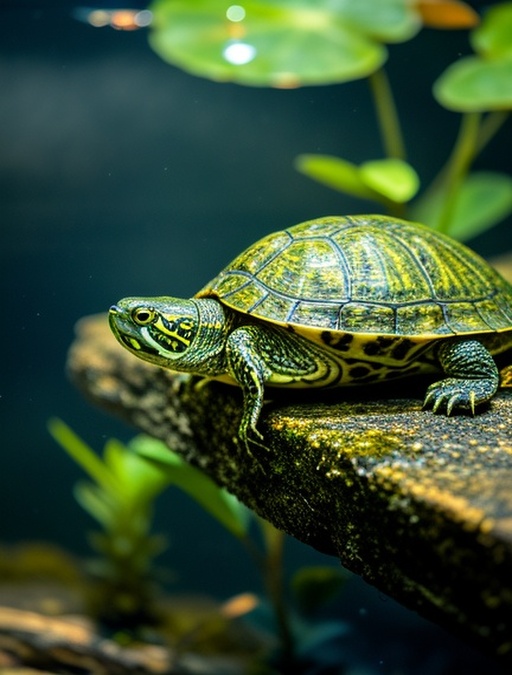
Alright, let's start with the basics – your turtle's pad, also known as their aquarium. Mississippi Map Turtles are semi-aquatic, which means they need both water to swim in and a dry spot to bask. For one adult turtle, you're looking at a minimum of a 75-gallon tank. I know, it sounds huge, but these guys are active swimmers and they need the space! The water should be deep enough for them to dive and swim around comfortably – about twice the length of their shell is a good rule of thumb. Now, here's a super important bit: you absolutely need a powerful filter. Turtles are messy eaters and, well, they poop a lot. A canister filter rated for a tank twice the size of yours is your best bet to keep the water crystal clear and free of harmful ammonia and nitrites. Clean water is the number one secret to preventing a ton of health issues, like shell rot and respiratory infections.
Next up, let's talk about that dry land. You need a basking area where your turtle can completely get out of the water and dry off. This spot needs to be warm, heated by a dedicated basking lamp to about 85-90°F (29-32°C). Why is this so crucial? Turtles are cold-blooded, so they rely on external heat to digest their food and to keep their metabolism running smoothly. Without proper basking, they can get really sluggish, stop eating, and become prone to illness. Right above the basking spot, you also need a UVB light. This isn't optional – it's essential! UVB light helps them produce vitamin D3, which allows them to absorb calcium from their food. No UVB means soft, deformed shells and weak bones, a condition called Metabolic Bone Disease, and trust me, you don't want that for your little friend.
Now, onto the fun part: feeding time! Mississippi Map Turtles are omnivores but they lean heavily towards being carnivores, especially when they're young. A balanced diet is key. For juveniles, offer a high-quality commercial turtle pellet as a staple, and supplement it with protein like earthworms, small crickets, or chopped fish (make sure it's not fatty like goldfish!). As they get older, you can introduce more plant matter into their diet. Think dark leafy greens like romaine lettuce, dandelion greens, and duckweed. Variety is the spice of life, even for turtles! A common mistake is overfeeding, which leads to obesity and liver problems. A good schedule is feeding juveniles daily and adults every other day, offering only as much as they can eat in about 15 minutes.
Okay, so you've got the setup and diet down. How do you know if your turtle is actually healthy? A healthy Mississippi Map Turtle is alert and active. Their eyes should be clear and bright, not swollen or shut. Their shell should be hard and smooth, without any soft spots, pits, or discolored patches. Peeling scutes (the individual plates on the shell) is normal as they grow, but the skin underneath should look healthy. Watch their behavior too. Are they basking regularly? Are they eating with gusto? If they're constantly hiding, floating lopsided, refusing food, or you see mucus around their nose or mouth, it's a red flag. Respiratory infections are common in poor water conditions, and symptoms include wheezing, gasping at the surface, and lethargy.
Prevention is always better than cure, so here's your turtle health checklist: Do weekly partial water changes (about 25-50%) to keep water quality top-notch. Check your filter regularly. Make sure those basking and UVB lights are replaced every 6-12 months, even if they still turn on, because the UV output diminishes over time. Handle your turtle minimally to reduce stress – they're not really cuddly pets. And finally, it's a fantastic idea to find a vet who specializes in reptiles before you ever have an emergency. Having a professional who knows their shell from their scute is priceless. Caring for a Mississippi Map Turtle is a commitment, but seeing that little patterned face peeking out at you, healthy and curious, makes it all totally worth it.