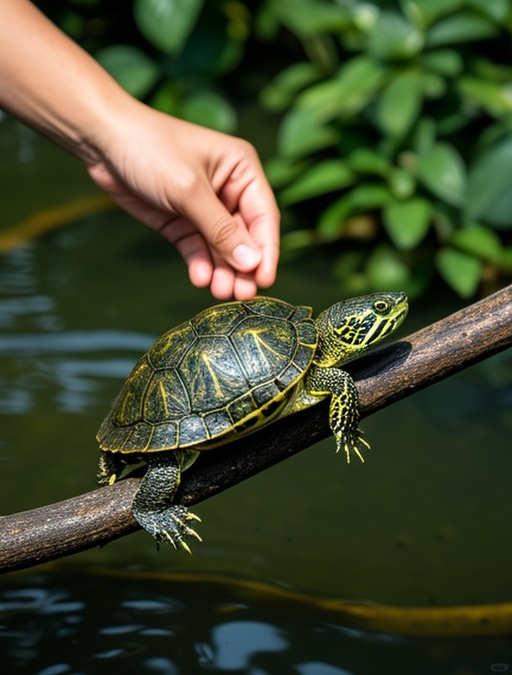
First things first, let's talk about patience. Map Turtles aren't puppies; they're reptiles with their own slow-and-steady pace. Training is all about tiny, consistent steps. Start by just sitting quietly by their tank. Let them get used to your presence. You might feel silly, but to them, you're this giant, potentially scary creature. Over days, they'll start to realize you're not a threat. This is the foundation of everything – trust.
Now, onto the fun part: target training! This is a game-changer. Get a small, brightly colored target stick (a chopstick with a red ball on the end works great). During feeding time, gently touch the target to the water's surface near their food. When they investigate or bump it, immediately drop a tasty treat, like a small piece of shrimp or a turtle pellet. Repeat, repeat, repeat! They'll start to associate the target with food. Soon, you can use it to guide them to different parts of the tank, onto a basking platform, or even to follow your hand. It's like having a tiny, shelled remote-control car!
Hand-feeding is another powerful trust-builder, but you gotta be careful. Those beaks are strong! Start by using feeding tongs. Hold a treat just above the water. Let them come to you. Once they're comfortable with the tongs, you can try offering a flat palm with a treat in the center. Never offer food with your fingertips – that's just asking for a mistaken nibble. This process teaches them that your hand means good things, not danger.
What about handling? Map Turtles often don't love being picked up. The key is to make it quick and stress-free. Support their entire body from underneath, never by the shell edges. Lift them smoothly and hold them close over their tank or a soft surface. Keep sessions short, like 5 minutes max, and always end with a treat back in their home. This teaches them that being handled is a brief, neutral event that always ends safely.
Dealing with shy or scared behavior is common. If your turtle constantly dives for cover, don't chase them. Instead, enrich their environment. Add more plants (real or silk), caves, and floating docks. A secure turtle is a confident turtle. You can also try dimming the room lights when you interact, making your presence less intimidating. Over time, their hiding spells will get shorter.
Consistency is your secret weapon. Try to interact at the same times each day, especially around feeding. Turtles are creatures of habit. They'll learn the daily rhythm: "Ah, the big friendly giant appears, then food happens!" This predictability reduces their stress and makes training progress much smoother.
Remember, every turtle is an individual. Some might be bold and curious, others more cautious. Celebrate the small victories! The first time they swim towards you without hiding, or willingly climb onto your hand for a treat, is a huge win. It's not about perfection; it's about building a bond of mutual respect with one of nature's coolest little navigators.