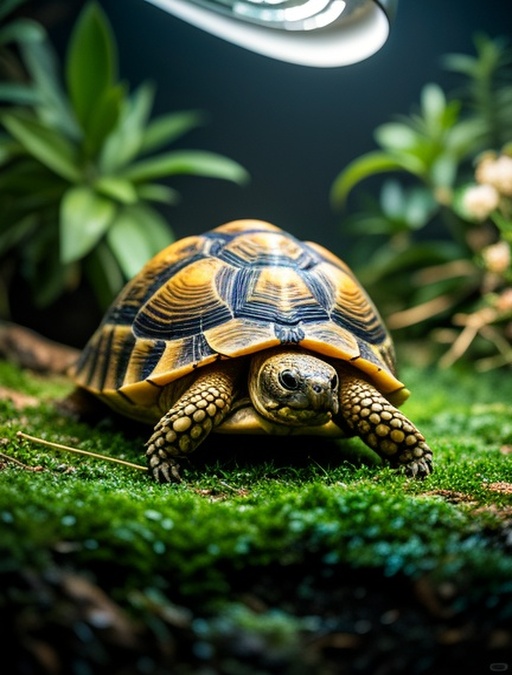
First things first, let's chat about their home sweet home, or what us pros call the 'enclosure'. If you're keeping your Hermann's Tortoise indoors, you gotta think big. A small tank just won't cut it – they need space to roam, explore, and do their tortoise thing. A custom-built wooden tortoise table or a really large reptile enclosure is the way to go. The substrate, or floor covering, is super important too. I like to use a mix of topsoil (make sure it's chemical-free!), play sand, and maybe some coconut coir. This mix holds moisture well and lets them dig, which they absolutely love. Avoid those tiny wood chips or gravel – they can be eaten by mistake and cause big tummy troubles.
Now, onto the weather inside their home! Hermann's Tortoises are cold-blooded, so they rely on us to create the perfect climate. You'll need a proper heat gradient. One end of the enclosure should have a basking spot under a heat lamp, reaching about 90-95°F (32-35°C). The other end should be cooler, around 70-75°F (21-24°C). This lets them thermoregulate – moving to warm up or cool down. And don't forget the UVB light! This is non-negotiable. UVB helps them produce Vitamin D3, which is essential for absorbing calcium and building strong, healthy shells. Without it, they can develop Metabolic Bone Disease (MBD), where their shell gets soft and deformed. Trust me, you don't want that. Change the UVB bulb every 6-12 months, even if it still lights up, because the UV output fades.
Alright, dinner time! What's on the menu for a Hermann's Tortoise? Think leafy greens and weeds – the stuff you might find in a meadow. Dandelion greens, clover, plantain, and chicory are all fantastic staples. You can also offer occasional treats like hibiscus flowers or a bit of mulberry leaf. Variety is the spice of life, even for tortoises! The key thing to remember is the calcium-to-phosphorus ratio. Their diet needs to be high in calcium and low in phosphorus. To help with this, I always keep a cuttlebone in the enclosure for them to gnaw on, and I lightly dust their food with a calcium powder (without Vitamin D3, since the UVB light helps them make their own) a couple times a week. Avoid fruits and vegetables high in oxalates or goitrogens, like spinach or kale, as everyday food. And never, ever feed them animal protein or dog/cat food – it will wreck their kidneys.
Hydration is another biggie. They need fresh, clean water available at all times in a shallow dish they can easily climb in and out of. Many Hermann's Tortoises love to soak, and it helps with hydration and passing waste. I give mine a warm, shallow soak for about 15-20 minutes once or twice a week. It's also a great chance to give them a quick once-over for any health issues. Speaking of which, let's talk about common health problems. Besides MBD from lack of UVB, watch out for respiratory infections. If you hear wheezing, see a runny nose, or notice your tortoise is lethargic and not eating, it's vet time ASAP. Another issue is parasites. A new tortoise should always see an exotic vet for a fecal check. Overgrown beaks and nails can also happen if their diet is too soft or they don't have rough surfaces to wear them down on.
Finally, let's not forget mental health! Yes, tortoises have brains and need stimulation. Provide hides for security, rocks and logs to climb over, and change up the layout of their enclosure now and then. If possible, and when the weather is warm enough, supervised outdoor time in a secure, predator-proof pen is the absolute best thing for them. Natural sunlight, fresh air, and a buffet of safe weeds do wonders for their overall well-being. Remember, caring for a Hermann's Tortoise is a journey of decades – they can live over 50 years! It's all about setting up the right foundations: a spacious home, proper heat and light, a species-appropriate diet, and lots of observation. Pay attention to your tortoise's normal habits so you can spot when something's off. When in doubt, find a good reptile vet. With a little knowledge and a lot of love, you'll have a healthy, thriving shelled companion for a very, very long time.