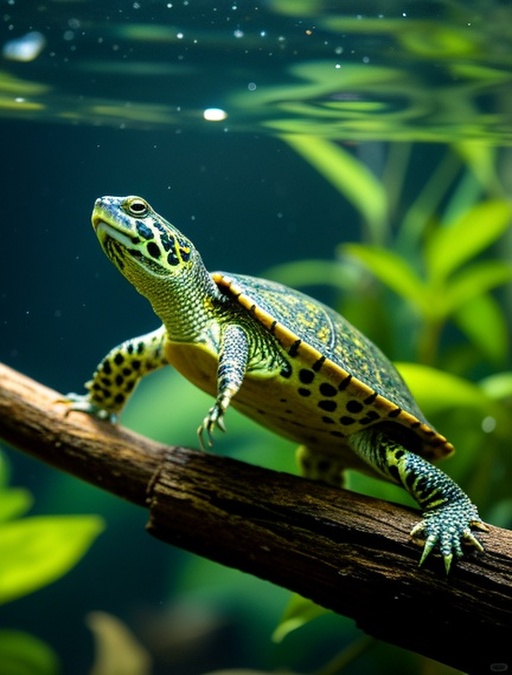
So, picture this: a turtle that doesn't pull its head straight back into its shell. Nope, this one bends its neck sideways, tucking it under the rim of its carapace. The first time I saw my Spotted-Belly, 'Shelly', do this, I thought she was broken! It's their signature move, and it's absolutely adorable. Their shells are usually a dark olive or brown, but the real showstopper is the belly – a creamy plastron covered in those distinctive black spots and smudges that give them their name. No two patterns are exactly alike!
Now, let's talk personality. These turtles are often described as shy, but I think 'cautiously curious' is more accurate. When I first got Shelly, she'd hide at the slightest movement. But over time, with patient, gentle interaction, she started to come out of her shell (pun intended!). She'd watch me from across the tank, her little head tilted. Feeding time became a game. I'd drop a piece of shrimp, and she'd wait, wait, wait... then *snap*! Lightning fast. They're much more observant and interactive than people give them credit for.
Setting up their home is crucial. These are aquatic turtles, so they need a spacious tank – think big! A good filter is non-negotiable because they can be messy eaters. They need a proper basking area with a heat lamp and UVB light to stay healthy and process calcium for their shells. Getting the water temperature and basking spot just right is key. I remember fiddling with heaters for days until Shelly finally seemed content, stretching out under her lamp like she was on a tiny tropical vacation.
One of my favorite anecdotes is about enrichment. I read that they like to explore, so I added some smooth, turtle-safe rocks and a piece of driftwood to her tank. For a week, she ignored it. Then, one evening, I caught her meticulously climbing over every new item, investigating every nook. It was like watching a little explorer map out a new continent. It reminded me that even reptiles need mental stimulation. Now, I occasionally rearrange her tank (gently!) to give her new 'territory' to check out.
Their diet is another interesting part. They're omnivores, so it's a mix. High-quality commercial turtle pellets are a good staple, but they love variety. Shelly goes crazy for earthworms and chopped up bits of fish. I also offer her leafy greens like romaine lettuce and dandelion greens. Finding the right balance was a learning curve – too much protein isn't good, and they can be picky about their veggies! It's all about observing and adjusting.
Here's a funny thing – they can live a long, long time with proper care. We're talking potentially over 30 years! That's a serious commitment, not just a casual pet. Getting a Spotted-Belly is like adding a long-term, low-key, shell-wearing member to your family. They're not cuddly, but there's a quiet companionship there. Watching Shelly paddle around, bask, and curiously eye the world outside her tank brings a surprising amount of calm and joy.
If you're considering one of these spotted wonders, do your homework. They need specific care, and their sideways neck means they can be prone to certain injuries if handled incorrectly (always support the whole body!). They're not the best 'hands-on' pet for young kids. But for someone willing to invest the time, setup, and patience, a Spotted-Bellied Side-Necked Turtle offers a uniquely rewarding experience. It's less about active play and more about appreciating a calm, ancient, and beautifully odd little life form.