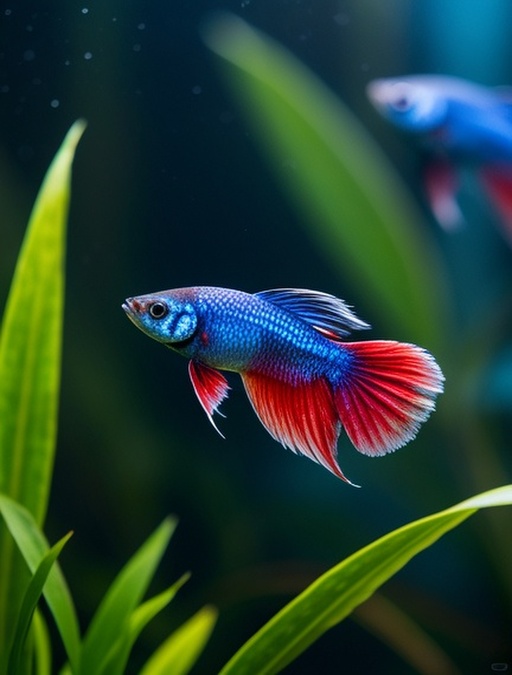
First off, let’s go over what a healthy betta looks like so you can spot issues early. A happy, healthy betta will be super active, zooming around their tank whenever you walk up, and will swim to the front when it’s feeding time like they’re begging for snacks. Their colors will be bright and vibrant, fins will be full and intact with no tears or discoloration, and they’ll even flare their gills and fins if you hold a mirror up to the glass (that’s totally normal, it’s their territorial side showing, don’t worry). If your betta is hiding all day, laying on the bottom of the tank, refusing to eat, has clamped fins that stay tucked against their body, or has weird spots, growths or fuzzy patches, that’s a red flag that something is off health-wise.
The number one cause of betta health issues is bad tank setup, let’s get that out of the way first. I know pet stores love selling those tiny 1 gallon betta bowls and saying they’re “perfect” for bettas, but that’s straight up wrong. Bettas are tropical fish, and they need a minimum of 5 gallons of water, a gentle filter (their fins are super delicate so strong current will tear them up and stress them out), and a heater that keeps the water steady between 75 and 80 degrees Fahrenheit. Cold water crushes their immune system, making them way more likely to get sick, and tiny tanks get dirty super fast, leading to ammonia spikes that can kill your betta in 24 hours without you even noticing. You also want to add lots of hiding spots, like live plants, driftwood, or little cave decor, so your betta has somewhere to go when they want to hide. Stressed bettas get sick way easier, so giving them a safe space cuts that risk by a ton.
The second most common cause of betta health problems is bad diet, so let’s talk about that. Bettas are carnivores, they eat bugs and larvae in the wild, so those generic colorful fish flakes you see at the store are basically junk food for them. They don’t have the digestive system to process all the plant filler in those flakes, so feeding them that long term leads to malnutrition, constipation, and a weak immune system. Stick to high quality, protein-heavy betta pellets as their main food, and give them treats 2 to 3 times a week, like frozen brine shrimp, daphnia, or bloodworms. Don’t overfeed, that’s a mistake almost every new betta parent makes! Only feed them what they can finish in 2 minutes, once or twice a day, and skip feeding them one day a week to let their digestive system rest. I used to overfeed my first betta all the time, and he got so bloated he could barely swim, until I started skipping a feeding day every Sunday, fixed the issue right away.
Now let’s go over the most common betta health issues and how to treat them, so you don’t panic if you notice something off. First up is ich, which is super easy to spot: it looks like tiny white salt grains all over your betta’s body and fins. It’s caused by a parasite, usually brought in by new plants, decor, or fish that weren’t quarantined, or sudden drops in water temperature. To treat ich, slowly raise the tank temperature to 82 degrees over 24 hours (don’t crank it up all at once, that will shock your betta), add aquarium salt at the recommended dose on the package, and if it doesn’t clear up in 3 days, pick up an over the counter ich medication from the pet store. Next is fin rot, which is when the edges of your betta’s fins look tattered, brown, or black, and start to shrink over time. This is almost always caused by poor water quality, so first do a 25% water change, test your water parameters to make sure there’s no ammonia or nitrite, and if the rot is spreading, use a fish-safe antibiotic to clear it up. If you catch it early, just fixing the water quality will usually fix the fin rot on its own.
Another super common issue is swim bladder disease, which is when your betta can’t stay upright, floats sideways at the top of the tank, or can’t swim up from the bottom. 9 times out of 10, this is caused by overfeeding or constipation, so don’t panic and think your betta is dying. The fix is super easy: fast them for 3 days, no food at all, then feed them a small piece of peeled, cooked pea to help them pass any backed up waste. That’s a trick I’ve used a dozen times, and it works almost every time. If it doesn’t clear up after 4 days, then you can check for other issues like internal parasites, but constipation is almost always the cause. The last common issue you might run into is velvet, which looks like a fine dusty gold or brown coating on your betta’s body. It’s a super contagious parasite, so if you have other fish in the tank you need to treat all of them. To treat velvet, dim the tank lights (the parasite uses light to grow), raise the temperature to 82 degrees, and use a copper-based fish medication for 7 to 10 days to kill all the parasites.
The best betta health care is prevention, right? It’s way easier to keep your betta from getting sick in the first place than to treat an illness after it starts. First, test your water weekly with a liquid test kit, don’t just rely on those test strips that are super inaccurate. You want to make sure ammonia and nitrite are at 0 ppm, and nitrates are under 20 ppm at all times. Second, quarantine any new plants, decor, or fish for 2 weeks before adding them to your betta’s tank. That way if they have parasites or bacteria, you can treat them before they get your betta sick. Third, don’t do 100% water changes unless it’s a total emergency, that kills all the beneficial bacteria in your filter that keeps your water safe, and shocks your betta with sudden changes in water temperature and pH. Instead, do 20 to 30% water changes every week to keep the water clean without messing up your tank cycle. Fourth, give your betta some enrichment! They’re super smart fish, and they get bored just like we do. Add floating plants, a little mirror you hold up for 5 minutes a day for them to flare at (great exercise for their fins!), or even a little ping pong ball they can push around the tank. Bored, stressed bettas have weaker immune systems, so keeping them entertained is a big part of their health care.
One last tip most people don’t know: bettas can live 3 to 5 years, sometimes even up to 7 years, if you take good care of them. I’ve had people tell me their betta only lived 6 months, and that’s almost always because they were kept in a tiny bowl with no heater or filter. If you follow these basic tips, your betta will be happy, active, and healthy for years to come. And if you ever notice something off with your betta, don’t wait to fix it! Bettas get sick fast, so catching issues early makes treatment way easier and more likely to work.