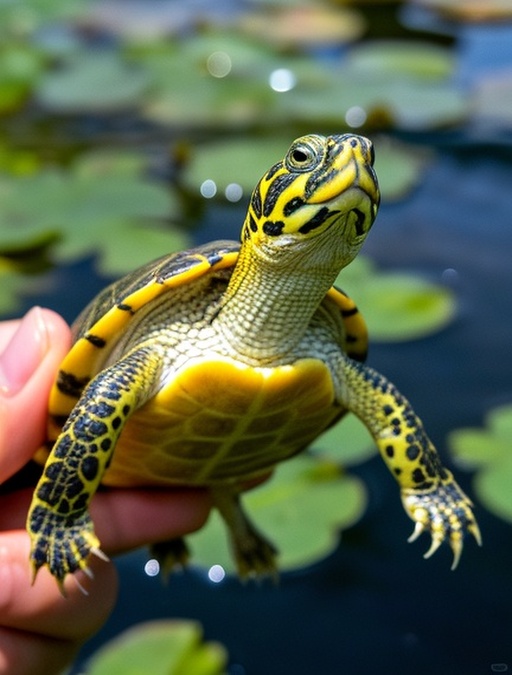
First off, let's start with the international rules that apply no matter where you live, yeah? Yellow pond turtles are listed on CITES Appendix II, which stands for Convention on International Trade in Endangered Species. What that means in plain English is you can't legally buy, sell, or transport one across international borders without special, hard-to-get permits from both the exporting and importing country. A lotta folks make the mistake of ordering a cheap yellow pond turtle from a seller in another country online, thinking they're getting a good deal. But almost all of those shipments get seized by customs, and you could end up with fines up to $10,000 in places like the US or EU, even if you say you didn't know it was illegal. Wild caught yellow pond turtles are super threatened in their native habitats in East Asia, so these cross border rules are there to stop poachers from selling stolen wild turtles to pet owners all over the world. Even if the seller says it's captive bred, if it's coming from another country, you still need all the official CITES paperwork, no exceptions.
Next up, national and state/provincial level regulations, which vary a lot depending on where you live. Let's start with the US first: Most states classify yellow pond turtles as regulated exotic or protected reptiles. For example, in California, Texas, and Florida, you need a special herpetology possession permit from the state's Department of Fish and Wildlife to keep even one yellow pond turtle as a pet, and you have to renew that permit every 1 to 3 years. Some states, like Oregon and Washington, even ban private ownership entirely unless you're a licensed wildlife rehabilitator or educational facility, no ifs ands or buts. Over in the EU, all member states follow the EU Wildlife Trade Regulation, which bans any ownership of wild caught yellow pond turtles completely, and you have to have official proof of captive breeding and legal origin for every turtle you own, stored somewhere easy to access if authorities ask to see it. In their native range, like China, yellow pond turtles are a Class II protected wild animal, so you need both a breeding permit and a possession permit from the local forestry bureau to keep one, and unpermitted ownership can lead to fines of thousands of yuan and even criminal charges if you have multiple unregistered turtles. I heard a story last year of a guy in Shanghai who got 3 months of community service and a $500 fine just for keeping one yellow pond turtle he got from a friend, no permit, he had no idea it was even a protected species.
Don't sleep on local city or municipal regulations either, even if your state or province says it's okay to keep these turtles. A lot of cities have their own exotic pet bans that include medium to large reptiles, and yellow pond turtles grow up to 10 inches long, so they fall into that category in a lot of places. For example, in Toronto, Canada, you can't keep any turtle that grows over 4 inches as a personal pet, and that includes yellow pond turtles, even if the federal government doesn't ban them. Some cities in the UK, like London boroughs, also have bans on keeping non-native turtle species as pets to stop them from being released into local waterways. If you rent your home, you also gotta check your lease agreement! A lot of landlords ban exotic pets even if the law allows them, and if you get caught with a yellow pond turtle in your rental, you could get evicted or be forced to rehome your turtle last minute, which is super stressful for both you and the animal.
It ain't just ownership rules you gotta follow either, there are welfare and release regulations that apply to every keeper, no matter where you live. Almost every country has animal cruelty laws that cover reptiles just as much as cats and dogs, so you can't just stuff your yellow pond turtle in a tiny 10 gallon tank and forget about it. You have to provide them with a properly sized tank (at least 10 gallons per inch of shell length, so a full grown adult needs a 75 to 100 gallon tank), a working filtration system, a basking area with UVB light and heat, and clean, temperature controlled water at all times. If you neglect your turtle, let it get sick without taking it to a reptile vet, or keep it in unfit conditions, you can get charged with animal cruelty, have all your pets seized, and be banned from keeping any animals for years. The other big rule you absolutely can't break is never releasing your pet yellow pond turtle into the wild. Even if you think you're doing the right thing by letting it "be free", they're an invasive species in most places outside their native East Asia, they outcompete native turtles for food and shelter, spread diseases to wild populations, and mess up entire aquatic ecosystems. Releasing a pet turtle is illegal in every single US state, all EU countries, and most of the rest of the world, and fines for this can go up to $50,000 in some areas, plus possible jail time if you release multiple turtles.
So what do you need to do to make sure you're following all the rules and keeping your turtle legally? First step, do your research before you even look for a turtle to buy. Look up your local city, state/provincial, and national laws first, you can usually find all the info on your government's fish and wildlife or natural resources website, and if you're still confused, give them a call and ask, they'd rather answer your question than have to fine you later. Second, only buy from a licensed, local reputable breeder that can give you all the proper paperwork, proof of captive breeding, and will help you apply for any permits you need. Never buy from random sellers on Facebook Marketplace, Craigslist, or street vendors, cause 9 times out of 10 those turtles are either wild caught, smuggled, or don't have the proper paperwork, and you'll be the one on the hook if you get caught. Third, keep all your permits, proof of purchase, and origin paperwork in a safe, easy to find place, make digital copies too just in case. If a wildlife officer ever comes to check, you need to be able to show them that your turtle is legal right away, no excuses about "losing the papers" will get you out of trouble. Fourth, if you ever can't take care of your yellow pond turtle anymore, don't release it, don't dump it at a park or pond. Reach out to a local reptile rescue, a licensed exotic pet shop, or find a new experienced owner that already has the proper permits to keep this species, that way you don't get in trouble and the turtle stays safe.
A lot of new keepers make the same common mistakes that get them in trouble, so let's run through those so you can avoid em. First, thinking "it's just a small turtle, no one will notice". Nah, wildlife officers do check social media! I've seen so many stories of people posting their yellow pond turtle on Instagram or TikTok, getting reported by a random viewer, and then officers show up at their door asking for permits. Second, buying a baby turtle thinking the rules don't apply to small ones, nope, the regulations apply to yellow pond turtles of all ages, even hatchlings that are only an inch long. Third, assuming that because a pet store is selling them, they're legal to own in your area. A lot of pet stores operate across state lines, so they might sell you a turtle that's legal in their state but not yours, and you're the one responsible for checking, not the store. Fourth, thinking that captive bred turtles don't need permits, even captive bred yellow pond turtles are still regulated under CITES and most local laws, so you still need all the right paperwork no matter where the turtle was born.
At the end of the day, following these regulations isn't just about avoiding fines or trouble, it's about protecting wild yellow pond turtle populations and making sure your pet turtle gets the care it deserves. It might feel like a lot of hoops to jump through at first, but once you get all your paperwork sorted and set up the right habitat, you'll have a chill, awesome pet that can live up to 40 years with proper care. Just take it slow, do your research, and don't cut corners when it comes to the rules, you and your turtle will be way better off for it.