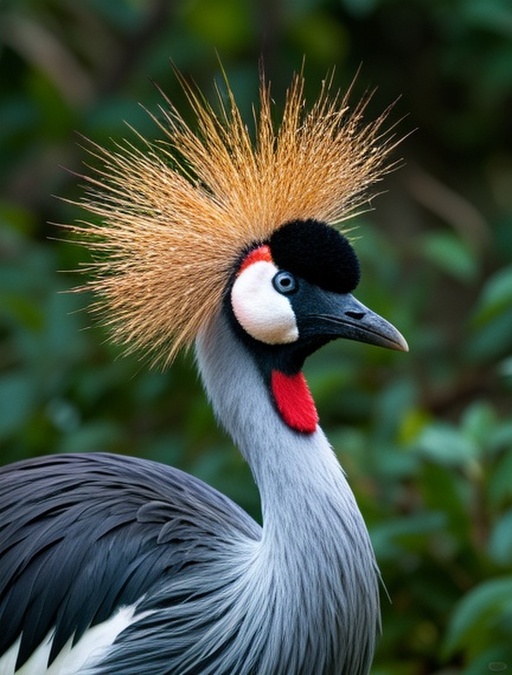
So, first things first – let's talk about that iconic look. Crowned Cranes, also known as Grey Crowned Cranes or sometimes just 'crowned cranes', are famous for their golden feather crests on top of their heads. It's not just a tuft of feathers; it's a proper crown made of stiff, golden strands that kinda looks like a fancy hairpiece. They've got this cool grey body with white wings that have patches of brown and gold, and their faces are mostly white with a bright red throat pouch. Honestly, they look like they're dressed for a bird gala every single day!
Now, where do these fancy birds live? In the wild, you'll find them strutting around in the wetlands and grasslands of eastern and southern Africa. They love areas with shallow water – think marshes, riverbanks, and flooded fields – 'cause that's where they find their grub. They're not big migrators; they tend to stick to their home turf, moving around a bit depending on the rainy season. But here's the thing: they're facing some tough times with habitat loss, so spotting one in the wild is becoming a real treat.
What's on the menu for a Crowned Crane? Well, they're not picky eaters! They're omnivores, which means they'll munch on pretty much anything. Their diet includes insects like grasshoppers and worms, small fish, frogs, seeds, and even some plants. They use their long beaks to probe in the mud and shallow water, kinda like a fancy fork at a buffet. Watching them hunt is a real show – they'll stomp their feet to scare up insects or do a little dance to stir up the water. It's both effective and entertaining!
Let's chat about their personality and social life. Crowned Cranes are super social birds; they usually hang out in small family groups or larger flocks, especially outside of breeding season. They're known for their elaborate courtship dances, which involve bowing, jumping, and flapping their wings – it's like a Broadway show in the wetlands! These dances aren't just for fun; they help pairs bond and sync up for breeding. They're also pretty vocal, making loud, trumpeting calls that can carry for miles. It's their way of saying, 'Hey, I'm here, and I'm fabulous!'
Breeding and raising chicks is a big deal for Crowned Cranes. They usually build their nests in tall, dense vegetation near water, using reeds and grasses to create a platform. The female lays 2 to 4 eggs, and both parents take turns incubating them for about a month. Once the chicks hatch, they're up and walking within a day – talk about fast learners! The parents are super protective, teaching the little ones how to find food and avoid predators. It's a real family affair, and seeing a crane family together is just heartwarming.
If you're thinking about keeping Crowned Cranes, there are some important things to know. First off, they need a lot of space – a large aviary or a secure outdoor area with access to shallow water for wading. Their diet in captivity should mimic what they eat in the wild, so a mix of insects, grains, and veggies works well. They're sensitive to cold weather, so proper shelter is a must in cooler climates. And remember, they're social birds, so keeping them alone isn't a good idea; they thrive with companionship. Oh, and check your local laws – owning exotic birds often requires permits!
Conservation is a huge topic for Crowned Cranes. Sadly, they're listed as Endangered on the IUCN Red List due to habitat destruction, illegal pet trade, and pollution. Many organizations are working hard to protect their habitats and breed them in captivity for reintroduction programs. If you're passionate about these birds, supporting conservation efforts or visiting ethical sanctuaries can make a real difference. Every little bit helps ensure that future generations get to enjoy these majestic birds too.
In a nutshell, Crowned Cranes are more than just pretty faces – they're fascinating creatures with complex behaviors and important roles in their ecosystems. From their stunning crowns to their joyful dances, they bring a touch of magic to the natural world. Whether you're an avid birdwatcher or just someone who appreciates nature's wonders, taking the time to learn about Crowned Cranes is totally worth it. So next time you see a picture or video of one, you'll know just how special they really are!