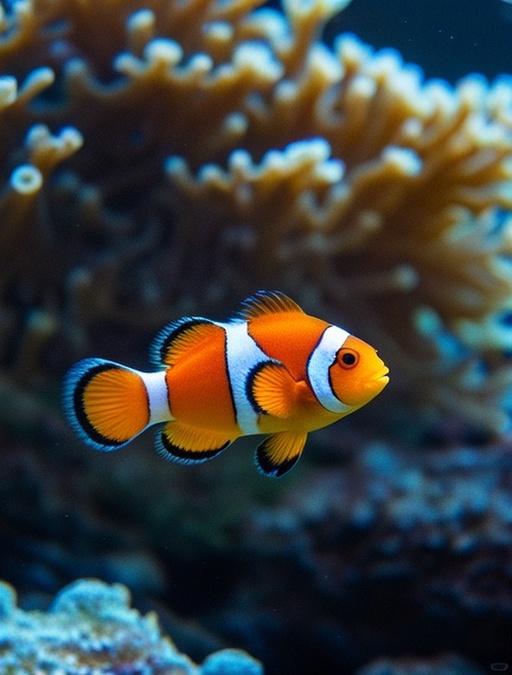
Let's be real, most of us first fell head over heels for clown anemonefish after watching Finding Nemo, right? Those bright orange bodies, snappy white stripes, and sassy little personalities are impossible to miss. But there's way more to these tiny reef darlings than just being a cartoon star. According to the Ocean Conservancy, the common clown anemonefish you see in most pet stores is scientifically named Amphiprion ocellaris, also called the false percula clownfish, to distinguish it from the nearly identical true percula clownfish that has thicker black edges on its stripes. They're native to the warm, shallow tropical reefs across the Indo-Pacific region, from the Red Sea and east coast of Africa all the way to Australia, Japan, and Southeast Asia. Unlike most other reef fish, they spend their entire lives tied to a single host sea anemone, rarely swimming more than 3 or 4 feet away from their home base their whole life.
Their relationship with sea anemones is one of the most famous examples of symbiosis in the ocean, per research from the Marine Biological Association. If you ever wondered why they don't get stung by the anemone's venomous tentacles that would paralyze most other fish in seconds, it's all thanks to their super thick mucus coat. A clown anemonefish's mucus layer is 3 to 4 times thicker than the average reef fish, and they slowly acclimate to their host anemone's specific sting by rubbing up against the tentacles little by little until their body builds up full immunity. The tradeoff for the anemone giving them a safe home and protection from predators? The clownfish chases away polyp-eating fish like butterflyfish that would snack on the anemone, eats leftover food scraps that get stuck in the anemone's tentacles to keep it clean, and their nitrogen-rich waste feeds the anemone's symbiotic algae to help it grow faster. It's a total win-win for both guys!
When it comes to physical traits, clown anemonefish are pretty small, topping out at around 4 inches long in the wild, and most captive bred ones only grow to 2 to 3 inches long when fully mature. The classic look is bright tangerine orange with three thick, vertical white bands, each outlined with a thin black stripe, but there are tons of cool captive bred morphs now too, like all-black clownfish, platinum white clowns, snowflake clowns with irregular white markings, and even orange skunk clowns with a single white stripe down their back. One of the wildest facts about them, per the Smithsonian's National Zoo & Conservation Biology Institute, is that every single clown anemonefish is born male. They're sequential hermaphrodites, meaning they can change sex once in their life, from male to female, when the situation calls for it. In any group of clownfish living in one anemone, there's a strict pecking order: the largest fish is the only female, the second largest is her breeding male partner, and all the rest are smaller, non-breeding males. If the female dies or leaves the group, the breeding male will change sex to become the new female, and the next largest male in the group moves up to be her new breeding partner. Wild, right? And once they change to female, they can never go back to being male again.
A lot of people assume clownfish are super sweet and docile because they look cute, but dont let that fool you, they're actually pretty feisty little guys, especially when they're guarding their home or their eggs. They're super territorial, and will chase and nip at any fish (even ones way bigger than them) that get too close to their anemone or their favorite hiding spot. The good news is, they're also incredibly hardy, which makes them the number one recommended fish for people who are just getting into saltwater aquariums. They tolerate small fluctuations in water parameters way better than most other delicate reef fish, so they're way more forgiving of beginner mistakes. In the wild, they're omnivores, munching on tiny zooplankton floating in the water, algae growing on the reef, leftover bits of fish the anemone catches, and even tiny crustaceans. In captivity, they're not picky eaters at all: you can feed them frozen mysis shrimp, high-quality saltwater fish pellets, frozen brine shrimp, and even small bits of blanched seaweed a couple times a week to give them extra nutrients. Just feed them once or twice a day, only give them as much food as they can eat in 2 to 3 minutes, and don't overfeed it, that's the fastest way to mess up your tank's water quality and make your fish sick.
If you're thinking of keeping clown anemonefish at home, let's go over the basic care requirements so you know what you're getting into. First, the minimum tank size for a single clownfish is 10 gallons, but if you're getting a pair, you wanna go for at least a 20 gallon long tank to give them enough space to swim and establish their territory. They're saltwater fish, so you need to make sure you have the right equipment: a good filter, a heater to keep the water between 75 and 80 degrees Fahrenheit, a hydrometer to test salinity (you want it to stay between 1.020 and 1.025, same as natural ocean water), and test kits to check ammonia, nitrite, nitrate, and pH levels regularly. pH should stay between 8.0 and 8.4, ammonia and nitrite should always be at 0, and nitrate should stay under 20 parts per million. Do 10-15% water changes every 2 weeks to keep the water clean and healthy. A super common question people ask is: do I need to get a sea anemone for my clownfish? The answer is no, actually! Most captive bred clownfish have never even seen a sea anemone in their life, so they're perfectly happy hiding in gaps in live rock, or even hosting in soft corals like toadstool corals, mushroom corals, or zoanthid colonies. If you do wanna add an anemone later, make sure your tank is at least 6 months old and fully cycled and mature, because anemones are way more sensitive to bad water quality than clownfish are, and they die really easily if your parameters are off. The easiest anemone for beginners that clownfish love is the bubble tip anemone, it's way hardier than carpet or long tentacle anemones.
One of the best things about clown anemonefish is that they're super easy to breed in captivity, which is a huge win for ocean conservation. 10 or 15 years ago, most clownfish sold in pet stores were wild caught from reefs, which hurt wild populations and destroyed reef habitats. Now, over 90% of clown anemonefish sold are captive bred, which is way better for the environment, and captive bred fish are healthier, hardier, and less likely to carry diseases than wild caught ones, so always look for captive bred fish when you're buying. Breeding pairs will usually lay their eggs on a flat, hard surface near their host anemone, like a smooth rock, the side of a powerhead, or even the glass of your aquarium. The male clownfish will guard the eggs fan them with his fins to keep them oxygenated, and eat any eggs that are unfertilized or have fungus on them to keep the rest healthy. The eggs hatch after 6 to 10 days, depending on how warm the water is. The baby fry are super tiny, only a few millimeters long, and you have to feed them tiny live food like rotifers for the first couple weeks, then graduate them to baby brine shrimp as they get bigger. All the cool, fancy morphs you see in pet stores, like snowflake clowns, platinum clowns, and orange storm clowns, are all specially bred captive variations of the common clown anemonefish.
Let's bust a few common misconceptions about clown anemonefish real quick, too. First, a lot of people mix them up with other anemonefish species, but there are over 30 different species of anemonefish total, and the clown anemonefish (Amphiprion ocellaris) is just the most popular and widely kept one. Second, no, you can't keep a clown anemonefish in a freshwater tank, they're strictly saltwater fish, putting them in freshwater will kill them in a matter of hours. Third, you don't need a huge 100 gallon reef tank to keep them, a pair of clownfish will be totally happy in a 10 or 20 gallon nano reef tank as long as you keep up with water changes and don't overstock the tank with too many other fish. The only thing you wanna avoid is putting two female clownfish in the same tank, because they will fight to the death, since there can only be one dominant female in a territory. If you're getting a pair, get two small clownfish that are around the same size, and they will naturally sort out their hierarchy on their own, with the larger one turning female and the smaller one staying male.